Introduction
Most cybersecurity professionals do not start their career in a senior role. They usually begin with basic work like checking alerts, helping with access issues, reviewing logs, fixing small security problems, or supporting the IT team during incidents. This work is useful because it gives real experience. You slowly understand how systems work, where mistakes happen, and how small issues can become big risks if they are ignored.
After some time, many professionals feel that they need to grow beyond daily technical tasks. They may know tools, but they also need to understand risk, policies, audits, business needs, and security planning. This is where CISSP becomes helpful. Many professionals choose CISSP Certification Training when they want to prepare in a proper way and understand cybersecurity from a bigger view. CISSP helps you move from only fixing problems to understanding why those problems happen and how to prevent them.
Why CISSP Is Useful for Cybersecurity Growth
Cybersecurity is not only about using tools or stopping attacks. In a real company, security also means protecting customer data, keeping systems safe, supporting compliance, and making sure business work does not stop because of security failures.
For example, giving extra access to employees may look like a small issue at first. But later, it can become a data risk, audit issue, or internal security problem. A technical person may only remove the access. A senior security professional will also ask why the access was given, who approved it, and how the same mistake can be avoided again. CISSP helps build this kind of thinking.
CISSP Is Not Just an Exam
Many people see CISSP as only a difficult exam, but it is more than that. The real value of CISSP is the way it changes your thinking. It helps you understand security from different sides, such as people, process, technology, risk, law, and business.
In normal security work, you may focus only on the task in front of you. But when you start thinking at a higher level, you begin asking better questions. What caused the issue? Which control failed? Who is responsible? What risk does it create for the company? How can it be prevented in the future? These questions are important for senior roles.
Moving From Technical Tasks to Senior Work
In the first few years of a cybersecurity career, most work is practical and task based. You may monitor alerts, close tickets, update firewall rules, check user access, or help during audits. This experience is important, but it is not enough for long-term career growth.
Senior roles need better decision making. You may need to explain a risk to management, prepare a policy, support a compliance review, guide a team during an incident, or decide which security issue needs attention first. CISSP helps because it teaches you how technical issues connect with business risk.
What You Learn in the CISSP Roadmap
The CISSP roadmap encompasses eight primary domains of cybersecurity. These domains consist of risk management, asset protection, security framework, network defense, identity and access control, security assessments, security operations, and software protection.
These topics may look separate, but in real work they are connected. For example, identity management is connected to access control. Security operations are connected to incident response. Architecture is connected to secure system design. Risk management is connected to almost every security decision. CISSP helps you understand these links clearly.
Real Experience Makes CISSP Easier
CISSP is easier to understand when you connect it with your own work experience. You do not need to know everything before starting. Many people come from different backgrounds like IT support, network security, system administration, cloud support, audit, compliance, or incident response.
If you have handled access requests, checked logs, followed security policies, worked with auditors, supported incident response, or helped with risk reviews, that experience can support your CISSP preparation. CISSP gives a proper structure to the work you may already be doing.
How CISSP Helps You Think Like a Leader
A security leader does not only manage tools. They also make decisions when there is pressure from business teams, management, clients, or auditors. Sometimes security teams want strong controls, but business teams want fast work. A good security professional should know how to balance both.
CISSP helps you think in this way. It teaches you to look at business impact, legal needs, data protection, access control, recovery planning, and policy requirements before making a decision. This is useful because senior cybersecurity roles need clear judgment, not only technical skill.
Simple Way to Prepare for CISSP
CISSP preparation should be done slowly and clearly. The syllabus is big, so rushing will only create confusion. A better way is to study one topic at a time and connect it with real examples.
For example, when you study access management, think about how new employees get access in your company. When you study disaster recovery, think about what your team will do if an important system stops working. When you study risk management, think about how your company decides which problem is urgent. This makes learning easier and more practical.
Mistakes to Avoid During CISSP Preparation
One common mistake is only practicing questions without understanding the topic. Practice questions are helpful, but they are not enough. CISSP often checks how you think, not just what you remember.
Another mistake is studying CISSP as a tool-based certification. CISSP is not about one tool or one product. It is about security principles. The better answer is usually the one that protects the business, reduces risk, follows policy, and supports long-term security.
Career Roles After CISSP
CISSP can help professionals move toward senior cybersecurity roles. These roles may include Information Security Manager, Security Architect, Senior Security Engineer, Governance and Compliance Lead, Cybersecurity Consultant, Risk Manager, or Security Program Manager.
These roles need more responsibility. You may have to guide teams, review risks, support audits, explain security issues to leadership, and help the company make better security decisions. CISSP gives you a strong base for these responsibilities.
Why CISSP Has Global Value
CISSP is respected in many countries because security problems are common in every industry. Banks, hospitals, software companies, consulting firms, and government organizations all need people who can protect systems and manage risk.
For professionals who want better job roles or global opportunities, CISSP can add value. It shows that you understand cybersecurity beyond tools. It also helps you speak about governance, risk, security design, operations, compliance, and business protection during interviews.
Build Your Basics Before Starting CISSP
Before starting CISSP, it is good to revise basic security topics. You should understand access control, authentication, encryption, network security, incident response, business continuity, and risk management.
Professionals who want a simple starting point can use Cybersecurity Learning Resources From SterlingNext to build their basics before going deeper into CISSP topics. When your foundation is clear, the advanced topics become easier to understand.
Growth After CISSP
CISSP is not the end of your cybersecurity career. It can become a strong base for your next step. After CISSP, you can move toward cloud security, security architecture, governance, audit, privacy, incident response, or risk management.
The best thing about CISSP is that it gives you a wider way of thinking. Tools will change. Technologies will change. But risk, access control, governance, secure design, and business protection will always remain important.
Conclusion
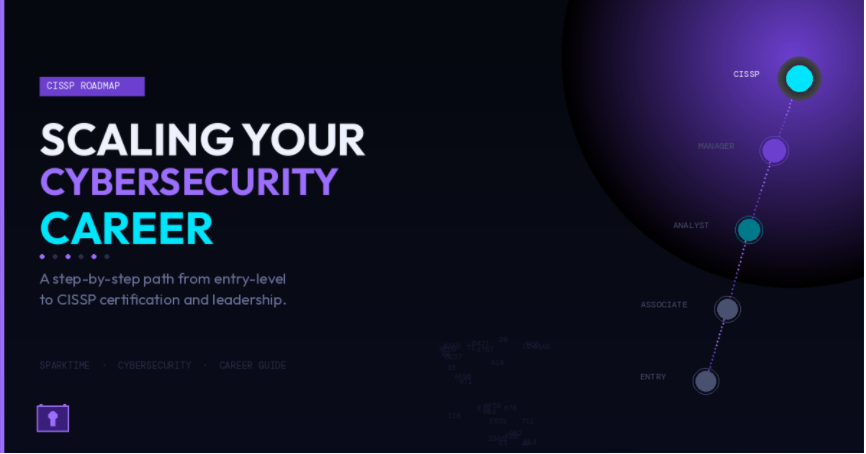
A CISSP roadmap is not only about studying for an exam. It is a career path for cybersecurity professionals who want to grow beyond daily technical work. It helps you understand risk, policies, security design, operations, and leadership decisions in a simple and connected way.
For professionals who want to scale their cybersecurity career, CISSP can be a strong step. With the right preparation and real work experience, it can help you move toward better roles, better decisions, and long-term growth in cybersecurity.
