A leather recliner sits at the intersection of comfort, craftsmanship, and quiet luxury. It is one of the few pieces of furniture that manages to feel both practical for daily use and elegant enough to anchor a well-designed room. Whether tucked into a reading nook, placed beside a fireplace, or paired with a matching sofa in a family living room, a good leather recliner earns its space day after day. It cradles you after a long shift, lets you stretch out during a movie, and slowly develops a patina that only real leather can achieve. This guide takes a direct look at what leather recliners actually offer, how the different mechanisms compare, which leather types tend to last, and how style choices shape the final feel of a room. No fluff, no filler. Just the essentials so you can walk into a showroom or scroll a catalog with a clear sense of what to look for and why certain features are worth the investment.
What Makes a Leather Recliner Worth the Space
Recliners have come a long way from the bulky, oversized designs that once defined the category. Today, a well-made leather recliner can look as refined as a lounge chair while still delivering the mechanical comfort people actually want. The appeal is layered. Leather breathes better than most synthetic upholstery, feels cooler in summer and warmer in winter, and improves visually with age rather than showing wear the way fabric often does. Add in the ability to recline, swivel, or elevate a footrest, and the result is a chair that quietly supports your body while blending into the room instead of dominating it.
The other quiet advantage is durability. Full grain and top grain leathers are naturally resistant to scuffs, tears, and everyday spills, and they wipe clean far more easily than woven materials. For households with pets, children, or high traffic, that means fewer worries about long-term wear. The upfront cost tends to be higher than a comparable fabric chair, but the extended lifespan usually flattens that difference over time.
Choosing the Right Type of Leather
Not all leather performs the same, and understanding the grades helps you avoid disappointment. Full grain leather uses the outermost layer of the hide with all its natural markings intact. It is the most durable and develops the richest patina, but it also comes at the top of the price range. Top grain leather is sanded and finished to remove imperfections, which gives it a more uniform look and a slightly softer feel, while still offering excellent longevity.
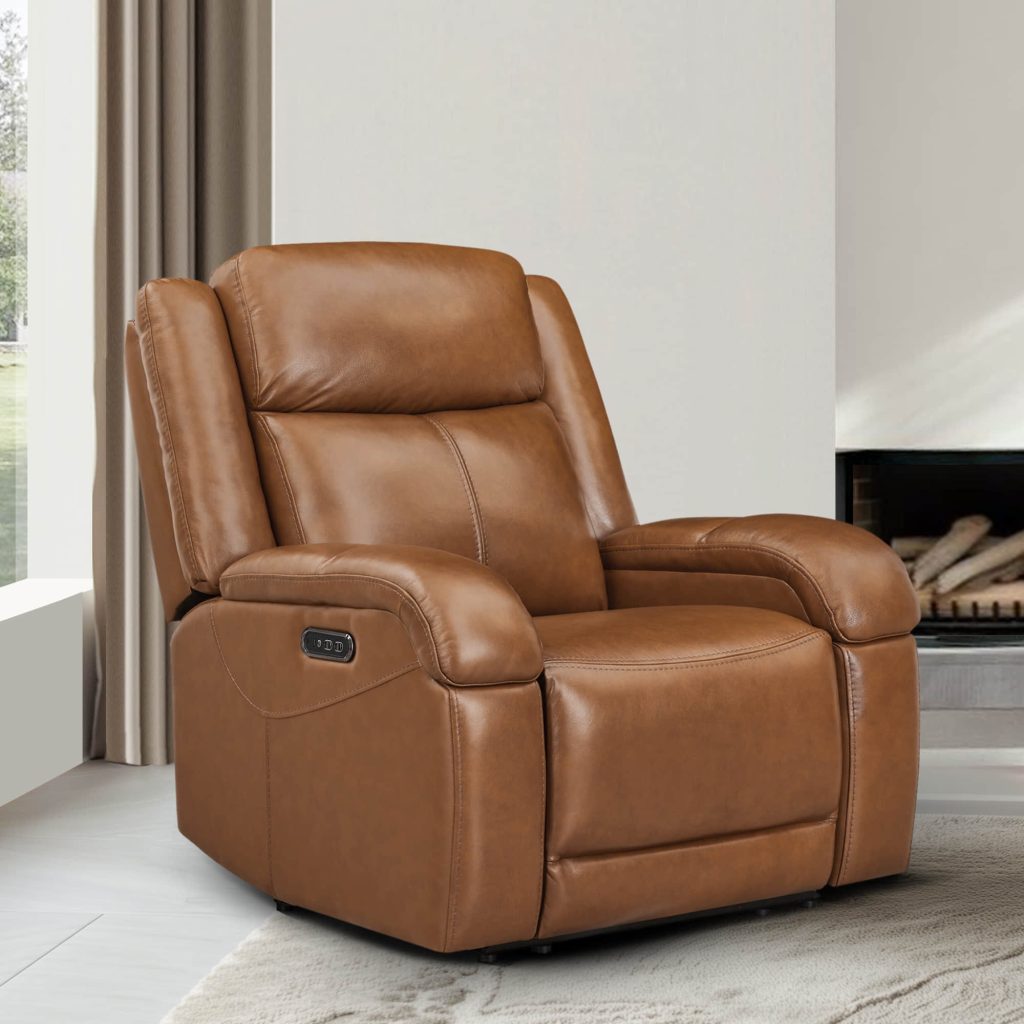
Below those tiers you will find split leather, bonded leather, and various faux leather blends. Split leather uses the fibrous inner layers of the hide and is less resistant to cracking. Bonded and faux leather can look convincing when new, but they rarely hold up beyond a few years of regular use. If longevity matters, focus on full grain or top grain options and always ask about the finishing process. A protected, semi-aniline, or nubuck finish each behaves differently under sunlight, oils from skin, and general household activity.
Understanding Recline Mechanisms
The mechanism inside the chair matters just as much as the leather on the outside. Manual recliners rely on a side lever or a push against the backrest to engage. They are simple, reliable, and typically cost less. Power recliners use a small motor controlled by a button, letting you find any position along the range rather than stopping at two or three preset angles. For anyone with limited mobility or joint discomfort, the smooth motion of a power model is a meaningful upgrade.
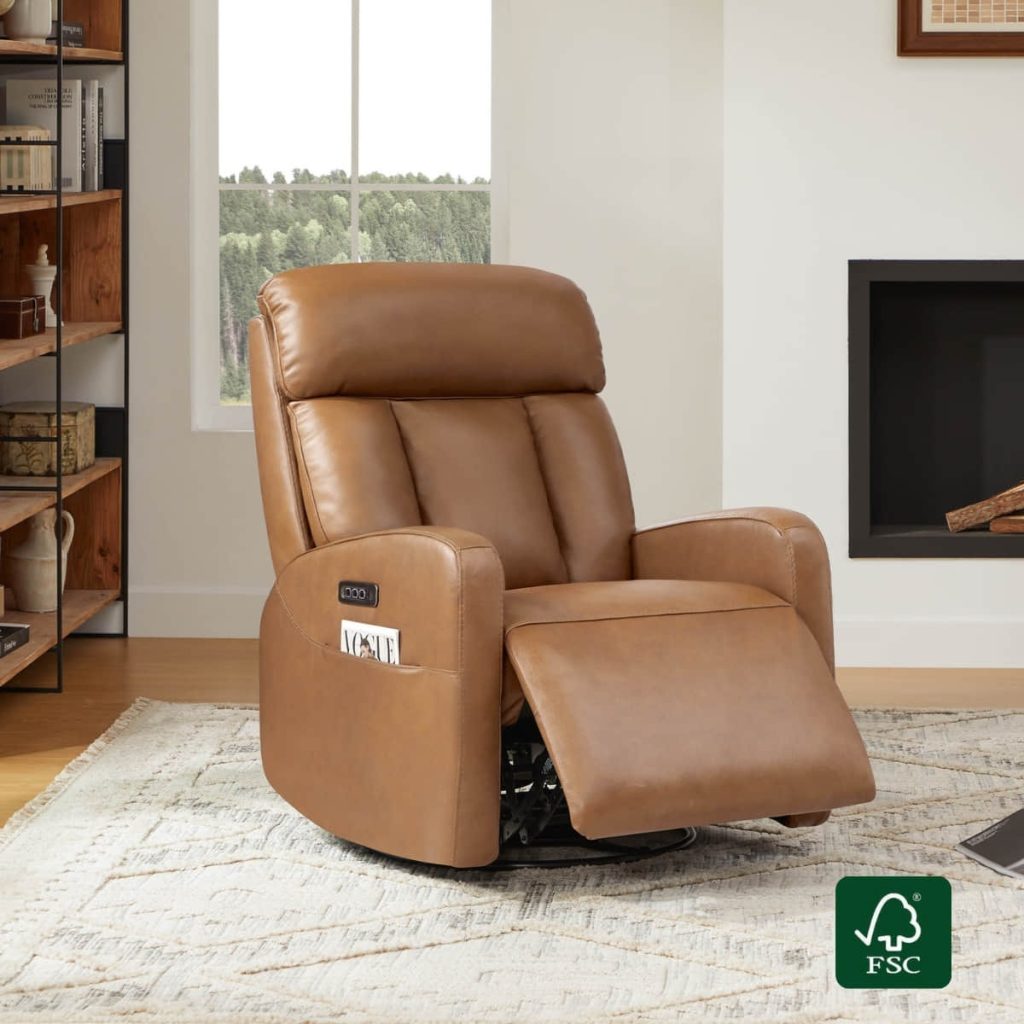
Beyond the basic recline, several variations deserve attention. Wall hugger designs move forward as they recline, which means they only need a few inches of clearance behind the chair. Lay flat recliners open into an almost horizontal position, ideal for napping or watching long films. Swivel gliders combine gentle rocking with rotation, which parents of young children tend to appreciate. Power headrests add adjustable neck support independent of the backrest, giving you a customized angle for reading versus watching television. Each mechanism serves a slightly different lifestyle, so it helps to picture how you actually plan to use the chair before choosing.
Matching Style to Your Room
A leather recliner can lean traditional, transitional, or distinctly modern depending on its silhouette and detailing. Tufted backs, rolled arms, and nailhead trim signal a classic look that pairs well with wood-toned furniture and warm neutral walls. Track arms, tapered legs, and clean stitching read more contemporary and settle nicely into rooms with lighter palettes or minimalist decor. Wall hugger and swivel styles tend to feel the most modern because they carry less visual bulk.
Color choice also carries weight. Cognac and camel leathers warm up cool-toned rooms and age with beautiful character. Deep browns and espresso finishes ground a space and hide daily marks well. Black lends a formal, tailored feel that works particularly well in libraries or media rooms. Lighter neutrals like ivory or dove gray have grown popular in modern interiors, though they ask for a bit more cleaning attention. Brands like CHITA LIVING have leaned into designs that balance these style directions, giving buyers options that feel fresh without abandoning the comfort that first drew people to recliners in the first place.
Care That Extends the Life of Your Chair
Real leather rewards a small amount of routine care. Dusting weekly with a soft, dry cloth keeps particles from settling into the grain. A gentle wipe with a slightly damp cloth handles most everyday marks, and a leather conditioner applied two to four times a year keeps the material supple and resistant to cracking. Direct sunlight is the main enemy. Prolonged exposure can dry out leather and cause uneven fading, so position your chair away from strong afternoon light or use sheer window coverings during peak hours.
Spills should be blotted rather than rubbed, and harsh cleaners with ammonia or alcohol should stay far away from the surface. For power recliners, occasional attention to the mechanical parts helps preserve smooth operation. Check the power cord for wear, keep the motor housing free of dust, and avoid overloading the footrest with excessive weight when it is extended. Small habits like these are the difference between a chair that fades after five years and one that still looks handsome a decade or two into ownership.
Finding the Right Place for It at Home
Placement affects both aesthetics and function. In a living room, a leather recliner works well angled toward the television or fireplace rather than lined up flat against a wall, unless the model is a wall hugger built for tight spaces. In a bedroom, a swivel glider placed near a window becomes a natural reading spot. Home offices benefit from a compact recliner in the corner, giving you a break area without leaving the room. Always leave enough clearance in front of the chair for the footrest to fully extend, typically around eighteen inches, and check the back clearance requirement for the specific mechanism you choose.
A Chair That Grows Into Your Home
A leather recliner is not simply a place to sit. It becomes part of the daily rhythm of a household, the spot claimed for morning coffee, quiet reading, a Sunday afternoon nap, or the last hour before bed. Choosing one comes down to a few clear priorities: the leather grade that suits your budget and expectations, the mechanism that matches how you actually relax, and a silhouette and color that feel at home in the room you already have. Get those three right and the rest tends to fall into place. Leather ages gracefully, mechanisms have grown more refined and quieter than ever, and modern designs no longer force a trade-off between comfort and style. Take your time, sit in a few options if you can, and think in terms of years rather than seasons. A well-chosen leather recliner rewards that patience by settling into your life and only looking better as it does.

