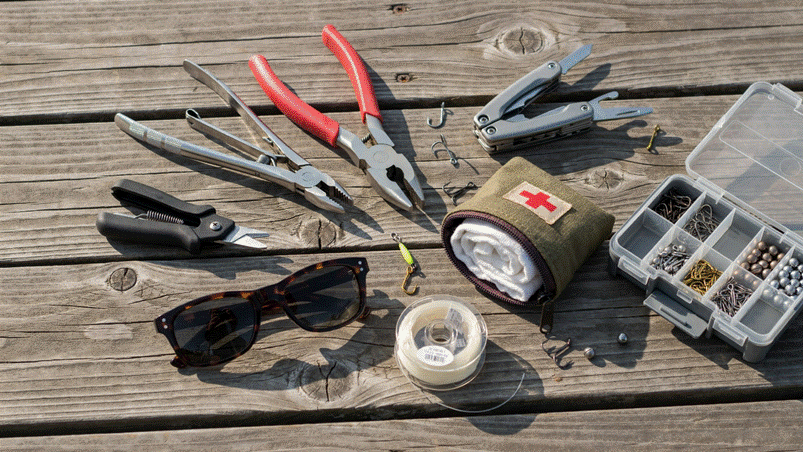
Every angler needs five things within reach on any given trip:
- A pair of pliers or hemostats for hook removal.
- A dedicated line clipper.
- Polarised sunglasses.
- A proper storage system for tackle.
- A first-aid kit suited to fishing injuries.
That is the short answer. The longer answer is that which specific fishing accessories matter, and how you carry them, changes depending on whether you are wading a river, working a saltwater mark, or drilling holes through ice. Building a kit around quality fishing accessories rather than whatever is lying around the house makes the difference between a smooth session and a frustrating one, and it is worth treating your kit as a proper system rather than a random collection of items.
I have spent enough mornings untangling a backlash in the dark, watching someone lose a good fish because their pliers were buried at the bottom of a tackle box, to know that “essential gear” is not really about the items themselves. It is about whether you can reach the right tool in the ten seconds you actually have. This guide walks through what to carry, why each piece earns its place, and how your kit should shift depending on where and how you fish.
The Core Carry: What Should Be On Your Body, Not In Your Bag
There is a meaningful difference between gear that lives in a tackle box back at the car and gear you need clipped to your vest or stuffed in a pocket. The core carry is the second category. These are the tools you will reach for constantly, often with a fish already on the line.
- Pliers or hemostats. For most freshwater sessions, locking hemostats do the job with more finesse, backing small hooks out of a bream or trout without tearing up the fish’s mouth. Anglers fishing salt water usually reach for longer, spring-loaded pliers instead, because bigger fish with sharper teeth call for more leverage and a tool that will not slip. Material matters more than people think. Cheap steel pliers rust solid within a season of saltwater use, while stainless steel holds up far better, and titanium, though pricier, barely corrodes at all.
- Line clippers or nippers. Many anglers get by on nail clippers for years, and that is fine until the blade dulls. A dull clipper does not cut monofilament cleanly; it crushes and frays it, and a frayed knot is a weak knot. That is how a fish gets away on a hookset that should have held. Dedicated clippers stay sharp for longer and handle braided line, which nail clippers often cannot cut at all.
- A compact multi-tool. This one does not get talked about enough. A multi-tool handles the jobs pliers and clippers cannot, such as tightening a loose reel handle, adjusting a seized drag knob, or freeing a hook wedged somewhere awkward. It is not a daily-use item, but when you need it, nothing else substitutes.
- A retractor or tool lanyard. If there is one thing that separates a well-organised angler from someone constantly patting their pockets, it is a retractor. Clip your pliers and clippers to a zinger or short lanyard and you will stop losing tools in the water, which is one of the most common and completely avoidable losses in fishing.
Building this core kit is usually the first upgrade worth making, and browsing a well-stocked range of fishing accessories online is the quickest way to see what a proper pliers-and-clipper setup should look like before you buy.
Vision, Sun, and Body Protection
Fishing is an outdoor pursuit first and a skill second, and the gear that protects your eyes and skin does as much for your results as anything in your tackle box.
- Polarised sunglasses. These cut surface glare and let you see into the water, spotting structure, weed lines, and fish holding just below the surface that you would otherwise cast straight past. Lens tint changes what you can actually see. Amber or copper lenses perform best in low light or overcast conditions because they boost contrast. Grey lenses suit bright, open water since they cut brightness without distorting colour. Blue or green mirror coatings work well offshore, where glare off open water is intense. If you only own one pair, amber or copper is the more versatile choice for rivers and lakes, while grey suits open sea work better.
- Sun protection. A wide-brimmed hat and UPF-rated clothing matter more over a full day on the water than most people plan for, since exposure is stronger when it is coming from above and reflecting off the surface at the same time. For sunscreen, reef-safe or mineral formulas are worth choosing if you fish anywhere near coral or sensitive marine habitat.
- A first-aid kit built for fishing, not walking. A generic first-aid kit misses the injuries anglers actually get. Hook punctures are the obvious one, so antiseptic wipes and fine tweezers matter more here than a roll of gauze. Anglers working saltwater marks should also carry something for jellyfish stings or spine punctures from species like weever fish, both common enough on coastal trips that a standard kit will not cover them well.
Storage and Terminal Tackle
How you carry your gear changes as much as what you carry. Anglers tend to over-invest in buying more tackle and under-invest in organising what they already own.
- Choosing between a tackle box, sling bag, or vest. This comes down to how much you move during a session. Bank and shore anglers who set up in one spot for a while are usually best served by a hard-sided tackle box, giving more storage for less carrying. Anglers who wade or move frequently along a bank tend to prefer a sling bag or chest pack, which stays out of the water and keeps both hands free. Boat anglers often split the difference, using a larger box as a base and a smaller sling for what they need at the bow.
- Terminal tackle worth restocking regularly. Extra hooks in a couple of sizes, split shot, barrel swivels, and a few floats cover most rigging needs. These are also the items that get lost fastest, to snags, break-offs, and fish that manage to shake free, so a quick check before each trip saves you discovering a gap mid-cast.
- A small bag for spent line and wrappers. This sounds minor, but it does real work. Discarded monofilament does not break down quickly, with estimates putting it at several hundred years in fresh water according to the Wisconsin Department of Natural Resources, and it is one of the more common causes of entanglement injuries in birds, fish, and other wildlife. Schemes such as the BoatUS Foundation’s Reel in and Recycle programme have installed tens of thousands of monofilament recycling bins at boat ramps and marinas specifically because loose line left on banks and piers causes so much harm. Packing out your used line and dropping it in a proper bin, rather than the general bin, keeps it out of landfill and out of the water. It costs nothing extra and takes ten seconds.
Situational Gear: What Changes by Where and How You Fish
This is the part most gear lists skip entirely, and it is the part that actually determines whether your kit works for you. The right gear is not universal. It shifts with water type, target species, and how you are getting to the water.
- Freshwater versus saltwater. Salt water is brutal on gear. Anything metal, from pliers to bag hardware, needs to be stainless or coated, or it corrodes within a season. Freshwater anglers have more flexibility here and can generally use standard steel tools. Line choice differs too, since saltwater sessions often call for heavier fluorocarbon or braid to handle bigger, harder-fighting fish and abrasive structure such as rocks or mussel beds.
- Ice fishing. This gets left out of most “essential accessories” articles entirely, which is strange given how different the gear list actually is. Ice picks or safety spikes worn around the neck are a genuine safety essential, not an optional add-on, since they are what let you pull yourself out if the ice gives way. Insulated, waterproof gloves matter more than almost anything else on the list, because numb fingers make hook removal and knot-tying nearly impossible in freezing conditions.
- Shore, boat, and wading differences. Boat anglers should carry a throwable flotation device as a baseline safety item, something shore anglers do not need to think about. Waders benefit from a wading belt and, in faster or uneven water, a wading staff for balance. Bank and shore anglers can generally travel lightest, since there is no need to plan for slipping on submerged rock or a capsize.
Smart and Modern Accessories Worth Considering
Gear lists from a decade ago do not account for how much phones and small electronics have folded into a day on the water.
- A waterproof phone pouch. Beyond photos, a phone doubles as a species-identification tool and a way to check local regulations on the water.
- A digital scale with app logging. These have become cheap and accurate enough that keeping a running log of catches, sizes, and marks is realistic for a casual angler, not just competition fishermen.
- A headlamp with a red-light setting. Red light preserves night vision and does not spook fish holding near the surface the way a white beam does, a small detail that makes a real difference on early-morning or after-dark sessions.
Maintenance: Making Your Gear Last
Almost nothing on a standard gear list gets discussed in terms of upkeep, but the difference between pliers that last five years and pliers that seize up after one season usually comes down to a five-minute habit.
- Rinse and dry tools after saltwater use. Salt residue causes pin joints on pliers and hemostats to seize and corrode. A quick freshwater rinse and a wipe-down after every saltwater trip adds years to a tool’s life.
- Store sunglasses properly. Tossing polarised sunglasses loose into a tackle box scratches the lens coating fast, and scratched lenses lose the clarity that made them worth buying. A hard case solves this.
- Run a seasonal tackle audit. Once or twice a year, go through your box. Rusted hooks should go, sunscreen past its expiry date will not protect you properly, and old line gets brittle and prone to snapping at the worst moment. It is a twenty-minute task that prevents avoidable losses, and it is also a good moment to check whether your current fishing tools are still doing their job or need replacing.
Common Mistakes Anglers Make with Their Gear
A few patterns show up again and again, and most are easy to fix once you know to look for them.
- Overpacking a tackle box instead of building a lean, functional kit. More gear is not more preparedness. It is more time spent digging for the one item you actually need.
- Using dulled nail clippers well past their useful life. The line frays, the knot weakens, and the fish that should have been landed gets away.
- Skipping a retractor and losing tools in the water. This is one of the most common and most preventable losses in fishing.
- Mismatching sunglass lens tint to conditions. Wearing dark grey lenses on an overcast morning cuts visibility instead of helping it.
Frequently Asked Questions
What accessories do I need to start fishing?
A rod, reel, and line cover the basics, but pliers, a line clipper, polarised sunglasses, and a tackle box for storage are what most anglers add first once they move past a single outing.
What is the most important fishing accessory?
Most experienced anglers would point to a good pair of pliers or hemostats, since safe hook removal affects both your results and the fish’s survival if you are releasing it.
How do I organise my tackle box?
Group items by function rather than size. Keep hooks, weights, and swivels in separate compartments, and store the tools you use most, such as pliers and clippers, somewhere you can reach without unpacking the whole box.
Do I need different fishing tools for saltwater?
Yes. Standard steel tools corrode quickly in salt water, so stainless steel or titanium tools last considerably longer and are worth the extra cost if you fish the coast regularly.
How often should fishing pliers be replaced?
Well-maintained stainless or titanium pliers can last several years. The main failure point is corrosion from saltwater exposure without rinsing, which can seize the joint within a single season of neglect.
Quick-Reference Checklist
| Category | Item | Why It Matters |
| Core Carry | Pliers or hemostats | Safe, fast hook removal |
| Core Carry | Line clippers | Clean cuts, stronger knots |
| Core Carry | Retractor or lanyard | Keeps tools from being lost |
| Vision & Safety | Polarised sunglasses | See structure and fish beneath the surface |
| Vision & Safety | First-aid kit | Treats hook punctures and stings |
| Storage | Tackle box or sling bag | Keeps gear organised and accessible |
| Storage | Small trash bag | Prevents line from harming wildlife |
| Situational | Ice picks or wading staff | Water-type-specific safety |
| Maintenance | Freshwater rinse | Prevents saltwater corrosion |
The Bottom Line
A good fishing kit is not a pile of gear. It is a system built around what you can reach in the moment you actually need it, adjusted for the water you are fishing that day. Start with the core carry, add what your specific trip demands, and take ten minutes after each outing to rinse, dry, and restock. That habit alone will do more for your results on the water than any single item on this list, and a quick look through a proper range of fishing accessories and tools is a solid place to start building it out.