For a while, the assumption was that only large companies with massive compute budgets could build genuinely useful language models. That assumption hasn’t held up. Open source LLMs have improved rapidly, and many now perform well enough for everyday tasks like coding help, drafting, and research summarization, all without a subscription fee or a data-sharing agreement.
What’s changed isn’t just the models themselves but the tooling around them. Running a capable language model on your own machine used to require serious technical know-how. That barrier is dropping fast, opening the door to developers, researchers, and privacy-conscious professionals who want AI capability without external dependencies.
What Makes Open Source LLMs Different
Unlike proprietary models locked behind an API, open source LLMs can be downloaded, inspected, modified, and run entirely offline. This matters for two big reasons: cost and control. There’s no per-token billing eating into a budget, and there’s no need to trust a third party with sensitive prompts or outputs.
Model quality varies across the open source ecosystem, but the top-tier releases from active research labs now handle reasoning, coding, and conversation tasks at a level that would have been considered state of the art just a couple of years ago. For most personal and small business use cases, the performance gap with commercial APIs has narrowed to the point of being negligible for everyday work.
Running Models Locally With Ollama
Ollama has emerged as one of the simplest ways to run open source language models on personal hardware. It handles model downloading, quantization, and serving through a straightforward command line interface, removing much of the complexity that used to scare newcomers away from local AI.
Choosing the Right Model Size
Model size directly affects both performance and hardware requirements. Smaller models run comfortably on modest hardware and respond quickly, making them ideal for simple tasks like drafting emails or answering quick questions. Larger models demand more memory and compute but handle complex reasoning and longer context far better. Matching model size to your actual hardware and use case prevents both wasted resources and frustrating slowdowns.
Integrating Ollama Into a Broader AI Setup
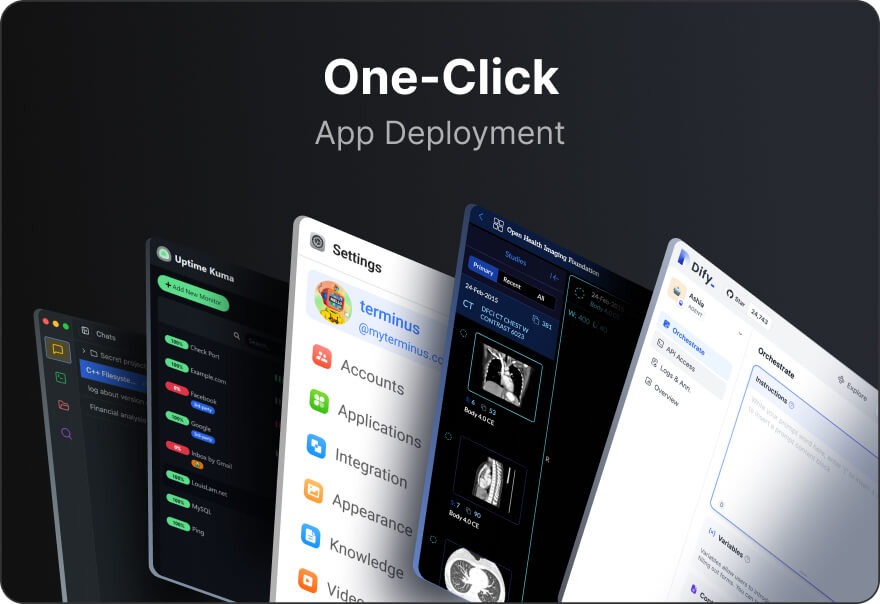
Running Ollama in isolation is useful, but it becomes more powerful when connected to other tools like chat interfaces, document search systems, or automation scripts. Self-hosted platforms such as Olares make this integration smoother by providing a consistent environment where Ollama and other applications can share resources and coexist without manual networking configuration. For anyone experimenting with open source llm deployments, this kind of managed environment removes a lot of the setup friction that typically comes with self-hosting.
Practical Applications Beyond Chat
Open source LLMs aren’t limited to conversational interfaces. Developers use them to power code review assistants that never send proprietary code externally. Writers use them for drafting and editing without worrying about content ending up in a training dataset. Small teams use them to build internal knowledge assistants that answer questions from company documents, entirely within their own infrastructure.
The common thread across these use cases is control. Once a model is running locally, you decide exactly how it’s used, what data it sees, and how long that data sticks around. That level of ownership is difficult to replicate with hosted APIs, no matter how generous the pricing.
The Practical Case for Going Open Source
Open source LLMs have reached a point where they’re a legitimate alternative to commercial AI services for a wide range of tasks, not just a hobbyist curiosity. With tools like Ollama simplifying deployment, the technical barrier to running these models has dropped substantially.
For anyone weighing the tradeoffs between convenience and control, open source models running on personal hardware offer a compelling middle ground. You get capable AI assistance without recurring fees or data privacy concerns, and as these models keep improving, that value proposition only gets stronger.
