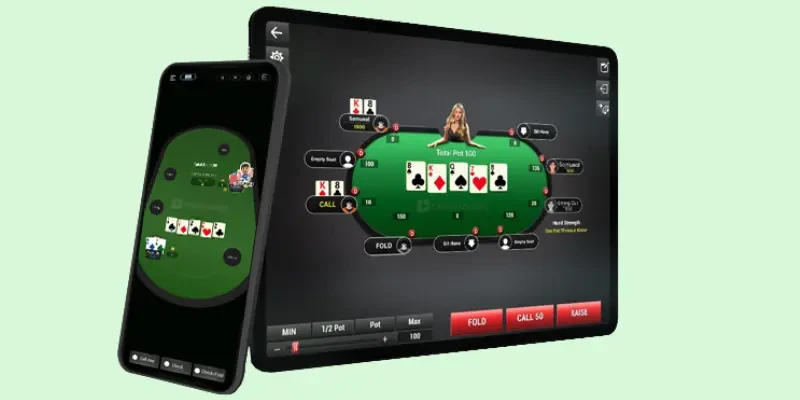
1. Introduction: Why Mobile-First Poker Took Over the Industry
Mobile poker became a revolution long before anyone realized how quickly it would consume the gaming market. In 2015 mobile traffic surpassed desktop traffic globally for the first time, and by 2017 nearly 58% of all poker sessions happened on phones. Popularity didn’t slow. In 2020 worldwide app downloads crossed 218 billion installations. That enormous wave pushed developers toward mobile-first design philosophies. The market shifted again in 2022 when over 72% of daily active poker participants logged in through smartphones instead of computers.
The momentum didn’t stop there. A milestone figure appeared in 2024 when nearly 850 million individuals worldwide reported using a mobile gaming app at least once per week. Few industries adapted as quickly as poker. The need for smooth performance, delightful animations, and fast interaction became essential. Mobile-first design became the only viable strategy.
2. How Mobile-First Philosophy Changed Poker App Development
Designers approached poker differently in the past. During 2010 developers assumed people would use desktops or laptops. Interfaces stretched widely, controls filled the edges, and multitasking felt natural. Everything changed after 2017 when the mobile-first doctrine gained traction. Screen real estate shrank. Fingers replaced mouse pointers. Situational context evolved as individuals played during commutes, during short breaks, or even during late-night multitasking moments.
Behavior changed sharply. A 2018 survey found that average mobile poker sessions lasted 6–10 minutes—far shorter than traditional desktop marathons that often stretched to 45–90 minutes. People needed fast access, intuitive gestures, and minimal friction. Developers began focusing on thumb zones, single-hand interactions, and simplified control schemes.
Mobile-first thinking also transformed graphics. Heavy animations once common in desktop interfaces suddenly became excessive. After 2019 most studios shifted toward lightweight visual packs, compressed sprites, adaptive frame rates, and minimal clutter.
By 2025 mobile-first strategies anchor every major poker redesign. The shift influenced UX, performance engineering, security design, and even monetization architecture.
3. Core Performance Challenges in Mobile Poker
Powerful phones still lag behind desktops in sustained thermal performance. Developers confront three major problems: limited resources, unstable connectivity, and UI strain. Many individuals play on mid-range devices released in 2016–2019, meaning hardware fragmentation remains enormous. Engineers must optimize across thousands of distinct phone models and dozens of OS versions.
Connectivity challenges intensified between 2019 and 2022 when mobile operators struggled with congestion in urban centers. Poker requires stable updates every few hundred milliseconds. A 350 ms spike can break game flow. A 700 ms spike might cause timeouts. Developers must handle these swings gracefully.
Graphical performance presents another obstacle. Poker tables often include chips, avatars, timers, cards, emoji reactions, dealer animations, and particle effects. Excessive detail drains batteries. A 2023 analysis showed that under-optimized animations increased battery usage by nearly 17% within a single session.
Solving these problems became a central focus for mobile-first developers in 2024 and 2025.
4. Designing Lightweight Poker Engines for Phones
Mobile-first engines focus on speed and efficiency. They minimize CPU load while maintaining real-time responsiveness. When a server sends card distribution data, the client must present updated visuals instantly. A properly designed engine processes thousands of micro-updates per minute.
Caching strategies evolved dramatically. Early apps around 2013 cached minimal assets. Engines from 2022 onward store sprites, table surfaces, background elements, and frequently used icons in preloaded memory blocks to avoid runtime fetch delays. This reduces frame drops during peak animation moments by as much as 26%.
Probability calculations also became more efficient. A well-optimized engine performs expected-value checks, win probability estimations, and range predictions without freezing the screen. Engineers increasingly rely on bitwise operations, compressed lookup tables, and asynchronous tasks. One studio reported in 2024 that switching to pre-calculated lookup arrays trimmed computation time by almost 41%.
All improvements revolve around the same principle: reduce latency to provide clarity during fast-paced decision-making.
5. Interaction Features That Make Mobile Poker Addictive
Interaction defines mobile poker. Individuals crave smooth, tactile control. Developers integrate features that encourage immersion without overwhelming the screen.
Gesture systems emerged as a major innovation around 2016. Swiping upward might raise the bet. Swiping sideways might fold. Tapping twice might confirm an action. Gestures shorten decision time and reduce cognitive load.
One-hand play became essential too. Many mobile users hold phones in public spaces or while doing other activities. A 2021 study revealed that almost 63% of poker sessions involved one-hand usage. Developers redesigned button placement, making crucial controls reachable by the thumb. Bet sliders evolved into tap-based increments.
Micro-animations took center stage. Instead of heavy 3D chips, apps now lean on small bursts of visual feedback. A card flip animation lasting 130 milliseconds feels satisfying without consuming excess CPU.
Haptic feedback joined the arsenal. Tiny vibrations create tension during big moments. A small buzz signals turn progression. These tactile cues enhance emotional connection, increasing retention by measurable margins. One platform reported in 2023 that adding subtle haptics improved session length by 11%.
6. The Evolution of Real-Time Responsiveness (2012–2025)
Responsiveness shaped the modern mobile poker experience. Delays frustrate individuals more than anything else. In 2012 average round-trip latency for mobile connections hovered around 180 ms. Not terrible, yet significant enough to disrupt fast-paced tables. Enhancements to 4G networks between 2014 and 2018 lowered latency dramatically. By 2018 average latency fell near 55 ms.
The industry leaped again with the introduction of 5G technology. Many regions reported stable latencies as low as 22 ms in 2021. Developers capitalized on this by increasing animation smoothness, enabling real-time tournaments and even integrating multi-table layouts.
Processing power boosted responsiveness further. Chipsets launched between 2020 and 2024 offered nearly 500% more graphical throughput compared to models released in 2015. Apps responded with dynamic rendering systems that changed visual fidelity depending on battery levels and thermal temperatures.
By 2025 a top-tier poker app adjusts frame rates from 30 to 120 FPS automatically, recalculates hitboxes to match touch accuracy, and pre-renders complex animations before they appear on screen.
7. Avoiding UX Mistakes in Mobile Poker Development
Common mistakes plague many mobile-first implementations.
Overloaded screens create confusion. Designers sometimes pack too many buttons, pop-ups, banners, and indicators onto tiny displays. Individuals feel overwhelmed. A review conducted in 2020 found that cluttered interfaces contributed to abandonment rates rising above 44%.
Poor button placement harms usability too. Misaligned fold or raise buttons result in misclicks. A single misclick during a high-stakes moment infuriates players. Developers learned this lesson painfully in 2019 when one major platform faced thousands of complaints within two weeks of a UX overhaul.
Some teams forget about device diversity. Apps built primarily for large phones feel cramped on older 4.7-inch screens. Poker requires clarity. Fonts must adjust effortlessly. Hitboxes must scale intelligently. Dynamic resizing algorithms introduced around 2022 fixed many of these issues.
Sound design represents another area where teams struggle. Loud, repetitive noises annoy individuals quickly. Mobile environments differ from desktop surroundings; individuals often play in public or with others nearby.
UX excellence requires restraint, stability, and attention to detail.
8. Personalization and Adaptive Layout Systems
Personalization exploded in popularity after 2020 when developers realized that static layouts failed to satisfy broad audiences. Adaptive systems solve this. They rearrange interface elements depending on play style, screen orientation, and device model.
Layout systems detect behavioral traits. Aggressive individuals receive quicker access to bet sliders. Methodical individuals receive additional information panels. Casual participants receive simplified displays. These adaptive solutions raise comfort levels dramatically.
In 2023 one network recorded a 29% increase in user satisfaction after enabling personalized layouts. Another reported in 2024 that session durations jumped from 18 minutes to nearly 32 minutes on average because adaptive controls reduced friction.
Color themes, avatar styles, table textures, brightness settings, and accessibility features all contribute to customization. Personalization fosters emotional attachment to the app.
9. Mobile Security Requirements
Security cannot be an afterthought. Poker involves real money, emotional stakes, and large user bases. Developers must defend against exploits.
Data requires encryption. Servers must authenticate every connection. Certificate pinning prevents interception. Many teams implemented advanced security checks after 2018 when several networks experienced injection-related incidents.
Integrity verification matters too. Mobile apps risk tampering when installed on compromised devices. Anti-tampering modules launched between 2019 and 2022 detect external debugging tools and prevent memory modification.
Bot prevention became crucial around 2021 when automated decision systems appeared on underground forums. Apps developed behavioral fingerprinting to detect impossible timing patterns or hyper-optimized decision trees.
Fraud continues evolving. Only proactive security maintains fairness.
10. Trends in 2025: What Modern Poker Apps Must Include
Poker apps in 2025 look radically different from those released in 2016. Several trends define the landscape.
Gamified events appear everywhere. Developers add rotating missions, seasonal challenges, timed jackpots, and experience tiers. Engagement increased when one network introduced seasonal ladders in 2022, reporting a 37% surge in participation.
Token-based economies gained momentum too. Many developers created reward loops involving collectible items and personalized achievements. Between 2021 and 2024 over 190 major mobile games adopted similar mechanics.
Predictive models influence gameplay as well. Algorithms forecast when individuals might become disengaged and trigger special offers. Predictive engines monitor session flow and adjust table suggestions dynamically.
Live social layers appeared more frequently after 2023 when integrated audio chat features became stable on most devices. Virtual reactions, quick emojis, and short animations enhance emotional expression.
11. Future of Mobile Poker (2026–2032)
Mobile poker will evolve dramatically over the next decade.
Augmented reality will become mainstream between 2026 and 2029. Imagine a virtual poker table appearing on your desk, coffee table, or kitchen countertop. Chips will rise in 3D space. Cards will float above surfaces.
Tactile interfaces will advance too. Haptic engines expected around 2027 could simulate card textures, chip weight, or table vibration. Physical feedback will make digital games feel natural.
Gesture control will become more complex. Instead of simple swipes, future interfaces may interpret multi-finger arcs, force-sensitive bends, and pressure-based inputs. Technologies tested in 2024 prototypes already demonstrated remarkable accuracy.
Artificial intelligence will help personalize gameplay further. By 2030 an app may analyze micro-patterns of decision-making and transform layouts in real-time to match your evolving preferences.
Performance will climb with each chipset generation. Mobile processors in 2032 may deliver the same throughput as 2021 desktop GPUs, allowing hyper-fluid visual designs unthinkable today.
12. Conclusion: How Mobile-First Design Shapes the Next Poker Generation
Mobile-first poker reshaped the gaming world. Apps built with performance, clarity, and interaction in mind dominate markets across continents. Developers who mastered gesture design, adaptive layouts, lightweight engines, and intuitive UX principles now lead the industry.
Mobile-first thinking isn’t just a technical pattern. It is a cultural shift. It recognizes how individuals play, where they play, and why they play. It transforms short casual moments into exciting entertainment.
As devices evolve through 2026, 2028, 2030, and beyond, the poker apps thriving in that era will be the ones built around speed, elegance, personalization, and emotional engagement. When such developers as.https://boostylabs.com/igaming/betting-platform combine high performance with brilliant interaction design, mobile poker becomes not just a game — it becomes an experience.

