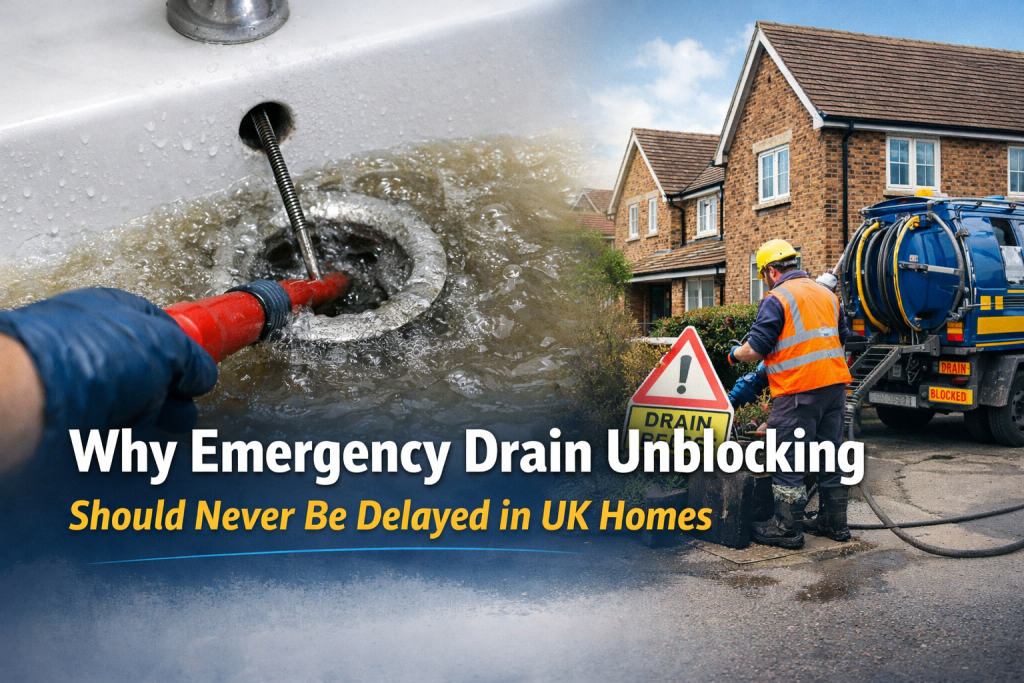
When a drain starts backing up, most people hope it will clear on its own. In reality, emergency drain unblocking should never be delayed, especially in UK homes where blocked water systems can move from a minor nuisance to a serious property problem very quickly. What begins as a slow sink, a gurgling toilet, or a foul smell can turn into overflow, damp, and costly repairs if it is left too long.
The biggest mistake homeowners make is waiting for the blockage to “settle down”. It usually does the opposite. Once water cannot move freely, pressure builds in the system. That pressure can expose a blocked drain pipe, damage fixtures, and spread the issue to other parts of the property. In many cases, what starts as a minor issue quickly turns into a situation that requires emergency drain unblocking to prevent further disruption and costly repairs.
Emergency Drain Unblocking: Why Speed Matters
A blocked drain is rarely just a single inconvenience. It can affect hygiene, cause unpleasant odours, and interrupt daily life almost immediately. More importantly, the longer you wait, the greater the chance of deeper damage inside the drainage system.
In many UK homes, the first signs are easy to miss. Water may drain more slowly than usual. Toilets may bubble after flushing. Outdoor gullies may hold standing water after rain. These are early warnings that the pipework is struggling.
If the problem is not dealt with quickly, the blockage can harden or spread. That is when blocked drain repairs become more involved, because engineers may need to clear the line, inspect the pipework, and check whether the blockage has caused cracking, collapse, or joint failure.
Common causes of urgent drain blockages
Most emergency call-outs are linked to a few familiar issues:
- wipes and sanitary products flushed by mistake
- grease, fat, and cooking oils washed down sinks
- tree roots entering older pipework
- soil, leaves, and debris in external drains
- scale or collapsed sections inside ageing drains
Water UK says the UK sees over 300,000 sewer blockages every year, and up to 70% are caused by fats, oils, grease, and other material that should not go down the drain. It also warns that sewer blockages can flood thousands of homes and create major clean-up costs.
What Happens When You Delay a Drain Response?
Delay is usually the point at which a simple issue becomes expensive. A slow drain can often be resolved with prompt cleaning or jetting. A neglected blockage, however, may trap waste inside the pipe for days or weeks, which increases the risk of structural strain and internal leakage.
That is one reason drainage specialists often recommend acting at the first clear sign of trouble. In some cases, a site visit from Precise Drainage Solutions would not just clear the issue, but also help identify the underlying cause before it returns.
If a blockage is allowed to worsen, you may notice:
- sewage smells around sinks, toilets, or outdoor drains
- water rising in unexpected places
- recurring overflow after flushing or showering
- damp patches near walls, floors, or external drainage lines
- repeated call-outs for the same fault
Once these symptoms appear, the issue may be deeper than a surface blockage. At that stage, a CCTV drain inspection becomes especially useful because it shows what is happening inside the pipe without unnecessary digging.
Why a CCTV Drain Inspection Can Save Time and Money
A CCTV drain inspection helps engineers find the true source of the problem. Instead of guessing, they can view the pipe in real time and see whether the issue is caused by a fat build-up, a cracked section, root ingress, or a collapsed blocked drain pipe.
This matters because not every blockage needs the same fix. Some drains only need high-pressure cleaning. Others need repair work, patch lining, or more extensive blocked drain repairs. By diagnosing the fault early, homeowners avoid paying for repeated call-outs and avoid letting a hidden defect develop into a larger failure.
If the drain serves a business property, the need for fast action is even stronger. Commercial sites often use more water, produce more waste, and experience heavier daily demand. That is why commercial drainage services often focus on rapid response and system-wide checks, not just clearing the immediate blockage.
Why UK homeowners should pay attention to responsibility
It is also worth knowing that responsibility can depend on where the blockage sits. GOV.UK advises that public drains are handled through the council route in England and Wales, while private drains on your property are usually the homeowner’s responsibility. In some council areas, you may need to report a blocked public drain through your local authority rather than organise private repairs yourself.
That is another reason not to delay. The sooner you confirm whether the blockage is private or public, the faster you can get the right team involved.
The Cost of Waiting Is Usually Higher Than the Cost of Acting
Homeowners often put off emergency drainage help because they hope the issue will disappear. Unfortunately, blocked drains rarely improve without intervention. The real cost of waiting is not only the emergency visit itself. It is the damage that can follow: flooring repairs, damp treatment, ruined plaster, foul water clean-up, and even repeat blockages if the root cause is never diagnosed.
A fast response often keeps the job simpler. A delayed response often turns a small blockage into a larger repair project.
That is why many drainage professionals recommend treating the first warning signs seriously. In practical terms, that means calling for help when the drain is slow, smells bad, or starts to back up, rather than waiting for a full overflow. For many homes, the difference between a quick fix and a bigger repair comes down to timing.
A Simple Rule for Homeowners
- If water is not moving as it should, do not ignore it.
- If the same drain keeps blocking, do not assume it is random.
- If you can smell waste or see water rising where it should not, treat it as urgent.
Quick action protects the pipework, reduces disruption, and gives engineers a better chance of resolving the problem before it spreads. It also helps keep homes cleaner, safer, and easier to maintain through the wetter months, when drainage systems are often under extra pressure.
Why Acting Quickly Makes All the Difference
Emergency drain unblocking should never be delayed in UK homes because small drainage problems can escalate quickly. What starts as a slow drain or an odd smell can soon become a blocked pipe, a hygiene issue, or a repair bill that is far higher than it needed to be. Early action, a proper diagnosis, and the right repair approach all make a real difference.
For homeowners who want to stay ahead of drainage problems, it helps to treat warning signs early and seek guidance from trusted local specialists before the issue spreads.
FAQs About Emergency Drain Unblocking
1. What counts as an emergency drain blockage?
An emergency blockage usually involves overflowing water, sewage smells, or multiple fixtures backing up at once and needing emergency drain unblocking quickly.
2. Can a blocked drain cause damage if left untreated?
Yes, delays can lead to damp patches, pipe strain, and more complex blocked drain repairs that are harder and costlier to resolve.
3. How do professionals identify the exact cause of a blockage?
Engineers often carry out a CCTV drain inspection to locate hidden issues such as root intrusion, cracks, or collapsed pipe sections.
4. Are outdoor blocked drains as urgent as indoor ones?
Yes, a blocked external drain can affect the whole system and may eventually cause internal backups if not addressed early.
5. Do businesses need faster drainage support than homes?
Typically yes, because higher usage levels mean issues escalate quickly, which is why many properties rely on responsive commercial drainage services when problems appear.