Why Natural Pest Control Fits the Homestead Mindset
Homesteading is built around the idea of working with nature rather than constantly fighting against it. That philosophy extends naturally to pest control, where reaching for a harsh commercial chemical often does more collateral damage than the pest itself ever would.
Natural methods take a bit more knowledge and a bit more patience, but they protect your soil, your animals, and your family from unnecessary chemical exposure. Once you understand a few core principles, most common homestead pests become manageable without a single toxic spray.
Understanding the Pests You Are Dealing With
Effective pest control starts with correctly identifying what you are actually up against. Aphids, ants, squash bugs, and rodents all require different strategies, and treating them all the same way wastes time and rarely solves the underlying problem.
Spend a few minutes observing where the pest is coming from, what it seems to be attracted to, and what time of day it is most active. This information shapes which natural method will actually work, rather than leaving you guessing.
Companion Planting as a First Line of Defense
Certain plants naturally repel specific pests or attract the beneficial insects that prey on them. Marigolds are a classic example, often planted alongside vegetables because their strong scent confuses many common garden pests.
Basil planted near tomatoes is said to deter hornworms, while nasturtiums act as a trap crop that draws aphids away from more valuable plants. Building these relationships into your garden layout reduces pest pressure before it ever becomes a real problem.
Diatomaceous Earth for Crawling Insects
Food-grade diatomaceous earth is a fine powder made from fossilized algae that works mechanically rather than chemically. Its microscopic sharp edges damage the exoskeletons of crawling insects, causing them to dehydrate and die within a day or two of contact.
It works well against ants, beetles, and other crawling pests when sprinkled around entry points, garden beds, or coop bedding. The powder needs to stay dry to remain effective, so it should be reapplied after rain or heavy watering.
Borax-Based Solutions for Ant Colonies
Ants present a particular challenge because killing the visible workers does nothing to address the colony underneath. A slow-acting bait is far more effective than a fast-killing spray, since worker ants need time to carry the poison back to the nest before they die.
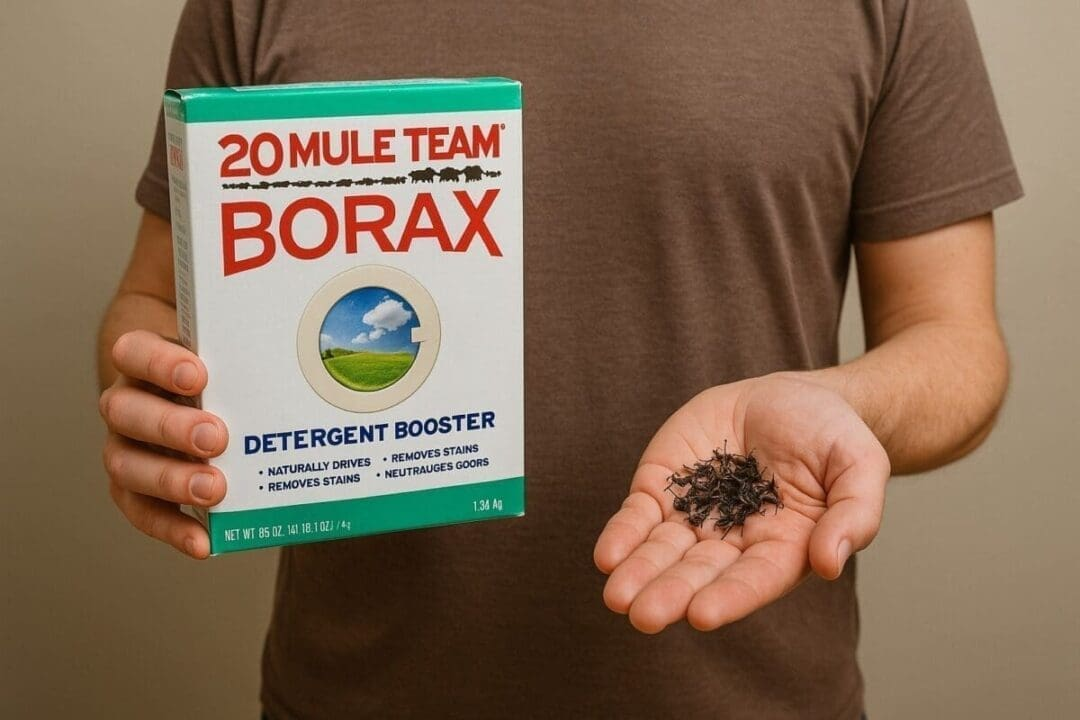
A simple homemade Borax ant killer, mixed with sugar or peanut butter to attract worker ants, exploits this exact behavior. The workers consume the bait and share it throughout the colony, eventually reaching the queen and larvae that a surface spray would never touch. This approach is inexpensive, uses common household ingredients, and avoids introducing harsher pesticides into the areas where children and pets spend time.
Beneficial Insects as Living Pest Control
Ladybugs, lacewings, and parasitic wasps all prey on common garden pests like aphids and caterpillars. Attracting these beneficial insects with flowering plants, shallow water sources, and reduced pesticide use turns your garden into a self-regulating ecosystem over time.
Purchasing ladybugs for release can jump-start this process, though many homesteaders find that simply planting the right flowers is enough to draw beneficial insects naturally. Patience matters here, since it can take a full season for populations to establish and start making a visible difference.
Physical Barriers and Exclusion
Sometimes the simplest solution is preventing pests from reaching your plants or animals in the first place. Row covers keep flying insects off young vegetable plants, while hardware cloth buried around coop foundations stops burrowing predators and rodents from getting inside.
Sealing cracks and gaps in outbuildings addresses another common entry point for insects and small rodents alike. These barriers require some upfront labor but need very little ongoing maintenance once properly installed.
Seasonal Timing Matters More Than Most People Realize
Pest pressure follows predictable seasonal patterns, and timing your interventions around those patterns produces far better results than reacting only after a problem is already visible. Ant colonies become active as soon as temperatures warm in spring, which makes early spring the ideal window for baiting before populations reach their peak size.
Garden pests like aphids and squash bugs tend to arrive in waves tied to specific plant growth stages, so knowing roughly when to expect them lets you prepare companion plantings or beneficial insect habitat ahead of time rather than scrambling afterward. Keeping a simple seasonal calendar specific to your region turns pest management from a reactive chore into a proactive, much less stressful part of homestead maintenance.
Balancing Natural Methods With Realistic Expectations
Natural pest control methods generally work more slowly than synthetic chemical treatments, and setting realistic expectations from the start prevents frustration and premature abandonment of an approach that simply needed more time. A borax-based bait, for example, may take one to two weeks to visibly reduce an ant population, compared to an instant kill from a harsh spray.
This tradeoff is usually worth it, since the slower methods tend to address root causes rather than just symptoms, but it does require patience. Communicating this timeline to other household members helps everyone stay committed to the natural approach rather than reaching for a harsher shortcut halfway through the process.
Cost Comparison With Commercial Pest Control
Hiring a professional pest control service for recurring treatments can run into hundreds of dollars annually, especially for ongoing ant or general insect management around a property. Homemade solutions using borax, diatomaceous earth, and companion planting cost a small fraction of that amount while giving you full control over what gets applied and where.
This cost difference matters even more on a working homestead, where pest pressure tends to be higher across a larger area than a typical suburban yard. Over several years, the savings from a natural, DIY approach can be substantial, particularly once you have the core supplies and knowledge already in place.
Adjusting for Multi-Species Homesteads
A property with chickens, a vegetable garden, and stored grain all in close proximity faces overlapping pest pressures that a single-focus approach will not fully address. Thinking about pest management at the whole-property level, rather than treating each area in isolation, often reveals connections, like ants moving between a coop and a nearby garden, that a narrower view would miss.
A Quick Recap of Core Principles
Identify the pest correctly, choose a method matched to its behavior, and give slower natural treatments the time they need to actually work. These three principles apply across nearly every pest challenge a homestead encounters, regardless of which specific method you ultimately choose.
Building a Long-Term Pest Management Plan
No single method solves every pest problem permanently, and that is by design. A resilient homestead combines several natural approaches, adjusting them seasonally as different pests become active.
Keeping a simple log of what pests appeared, when, and what treatment worked helps refine your approach year after year. Over time, this record becomes one of the most valuable tools you have for managing pests naturally and effectively across the whole property.
