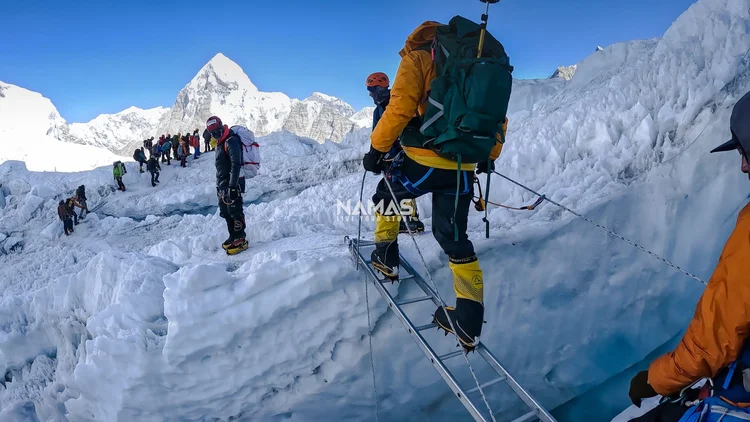
Climbing Mount Everest (8,848.86 m) is one of the biggest achievements in mountaineering and requires much more than physical fitness. Climbers need experience with extreme altitude, technical climbing, acclimatisation, long summit days, changing weather, and high-altitude decision-making. For climbers planning an Everest expedition, choosing the right preparation peak can help build the skills, confidence, and experience required for a successful ascent.
With the new Everest climbing rule purposed in 2026, climbers are required to have experience climbing a mountain of at least 7,000 m in Nepal in case of final approval. Therefore, choosing a suitable 7,000 m preparation peak is becoming an important part of the Everest preparation process. However, climbers should not select a mountain only because it meets the required altitude. The technical difficulty, climbing conditions, acclimatisation opportunities, and overall expedition experience should also be considered.
Choose a Peak Based on Your Climbing Experience
Every climber has different experience, skills, and physical abilities. Therefore, the best preparation peak depends on your previous mountaineering background. Climbers who have already completed several 6,000 m expeditions can consider progressing to a 7,000 m peak to gain experience at extreme altitude.
Himlung Himal (7,126 m) is one of the options for climbers looking to develop their high-altitude experience in Nepal. The expedition involves long days at altitude, snow-covered terrain, acclimatisation rotations, and a demanding summit push. Experience gained from these expeditions can help climbers understand how their body responds to higher elevations and how to manage long high-altitude climbing days.
Consider Technical Climbing Requirements
Altitude is not the only factor that matters when choosing a preparation peak. Everest climbers should also have experience using climbing equipment, travelling on glaciers, ascending fixed ropes, and dealing with steep snow and ice terrain.
Peaks with technical sections can help climbers improve their rope skills, crampon techniques, ice axe use, route management, and movement on exposed terrain. A climber should therefore choose a preparation peak that matches their existing technical ability while also providing opportunities to develop new skills.
Focus on Acclimatisation and High-Altitude Experience
Proper acclimatisation is one of the most important parts of any high-altitude expedition. A suitable preparation peak allows climbers to experience high camps, sleeping at altitude, acclimatisation rotations, cold temperatures, strong winds, and reduced oxygen levels.
A successful 7,000 m expedition can also help climbers understand pacing, hydration, nutrition, rest, and decision-making at high altitude. These experiences can become valuable when preparing for the longer and more demanding Everest expedition.
Prepare Progressively for Everest
The best approach is to build mountaineering experience progressively rather than rushing toward Everest. Climbers can begin with suitable 6,000 m peaks, develop technical skills, progress to 7,000 m objectives, and eventually prepare for an 8,000 m expedition.
Namas Adventure provides guided expeditions to Himalayan peaks with experienced guides, expedition logistics, acclimatisation planning, technical support, and strong summit strategies. With proper preparation and the right progression, climbers can build the experience required to approach the Everest Expedition with greater confidence.
Choosing the right preparation peak is not simply about meeting an altitude requirement. It is about gaining the right combination of high-altitude experience, technical skills, acclimatisation, physical endurance, and mountain decision-making before conquering the world’s highest mountain.
