Shaded areas in a backyard often get treated like wasted space. Grass struggles to grow, flowers don’t bloom as easily, and the corners can feel darker or less inviting compared to the sunnier parts of the garden. Because of this, many homeowners overlook these spaces entirely or assume they’re too difficult to improve.
But shade isn’t a problem. It’s an opportunity.
With the right approach, shaded areas can become some of the most comfortable, visually interesting, and usable parts of your outdoor space.
Instead of trying to fight the lack of sunlight, the key is learning how to design with it. Whether your backyard is shaded by trees, fences, or surrounding buildings, there are practical ways to turn those dim corners into functional and beautiful spaces.
Start by understanding your shade
Not all shade is the same, and this is where many people go wrong when planning their backyard design. Before making any changes, it’s important to observe how light moves through your space.
Generally, shaded areas fall into a few categories – full shade, partial shade and dappled shade.
Full shade means the area receives little to no direct sunlight throughout the day. This is common near walls, fences, or dense structures. Partial shade means the area gets a few hours of sunlight, usually in the morning or late afternoon. Whereas, dappled shade is created by trees or pergolas, where sunlight filters through in patches.
Understanding this difference matters because it affects everything. From the types of plants you choose to the materials you use, and even how you light the space at night.
A simple way to assess your backyard is to observe it at different times of the day. Notice where the sunlight falls in the morning, midday, and evening. This will help you decide whether a shaded area should be transformed into a garden space, a seating area, or a decorative feature.
Choose plants that actually like shade
One of the most common mistakes homeowners make is trying to grow sun-loving plants in shaded areas. This usually leads to poor growth and frustration.
Instead, the solution is to work with shade-loving plants that naturally thrive in low-light conditions. These plants are often more resilient and can bring life to darker parts of your backyard.
Some popular options include ferns, hostas, hydrangeas, ivy, begonias, and ornamental grasses that soften edges and add movement.
Layering different plant heights can make a big difference. For example, placing taller plants at the back and lower ground covers at the front creates depth, making the space feel more intentional rather than empty.
If maintenance is a concern, evergreen shade plants are a smart choice because they keep the area looking green year-round with minimal effort.
Improve lighting to transform the atmosphere
Lighting is one of the most powerful tools for improving shaded backyard areas. Even if a space doesn’t get much natural sunlight during the day, it can become warm and inviting at night with the right lighting design.
Instead of relying on a single bright light, think in layers. Different lighting sources can work together to create depth and atmosphere.
Some effective options include string lights draped across fences or pergolas, solar garden lights along pathways, and wall-mounted outdoor fixtures for structural lighting. Additionally, you can add lanterns for a soft decorative glow and LED spotlights to highlight plants or features.
Warm lighting tends to work best in outdoor spaces because it feels more natural and comfortable. Harsh white lighting can make shaded areas feel even colder or more enclosed.
Well-planned lighting doesn’t just improve visibility; it changes how the entire space feels. A once-dark corner can become a cozy evening retreat with the right setup.
Use lighter colours to open up the space
Shaded areas often feel darker simply because they absorb light rather than reflect it. One simple way to counter this is by using lighter colours in your design.
This can include light-coloured outdoor furniture, pale cushions or textiles, beige or cream paving stones, white or soft grey fencing, and neutral-toned decor pieces.
These lighter shades help reflect whatever natural or artificial light is available, making the space feel brighter and more open.
You don’t need to make everything white or minimal, but balancing darker natural shadows with lighter design elements can dramatically improve the overall feel of the space.
Turn shade into a comfortable retreat
Instead of trying to turn shaded areas into bright, sun-filled spaces, another approach is to embrace their natural atmosphere.
Shaded parts of a backyard are often cooler and quieter, making them perfect for relaxation zones. With the right setup, they can become some of the most enjoyable areas in your home.
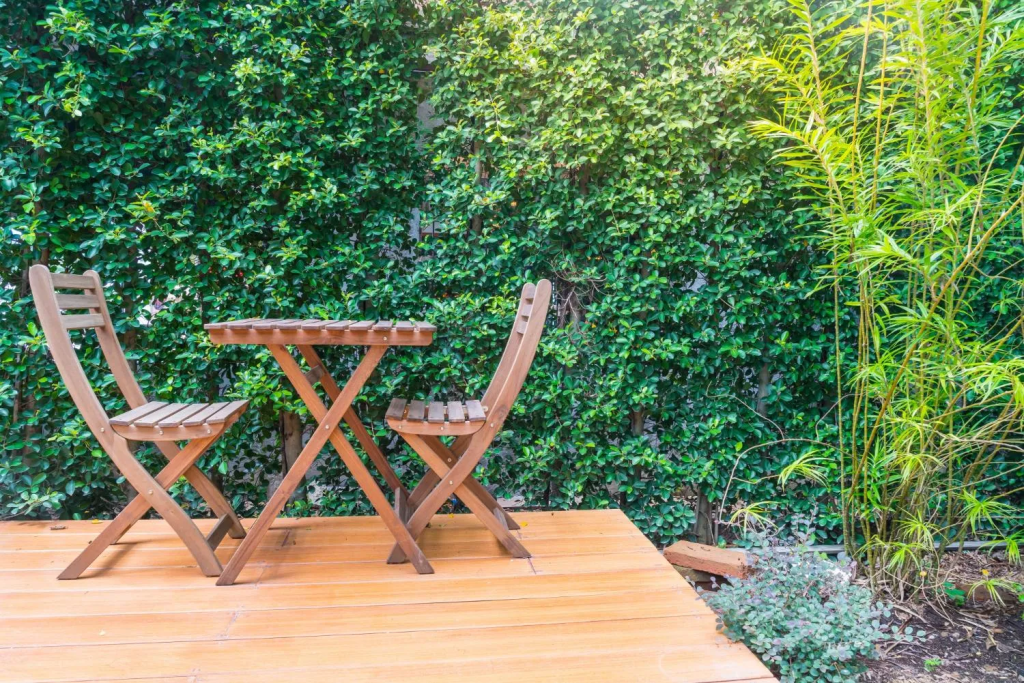
Consider adding outdoor lounge seating, a small dining table, hammocks or hanging chairs, soft outdoor rugs, or even a fire pit for warmth.
These spaces naturally work well as reading corners, coffee spots, or evening gathering areas.
The goal is to create a sense of comfort rather than trying to force brightness. Shade can actually make outdoor spaces feel more private and peaceful when designed thoughtfully.
Fix problem areas on the ground
Grass often struggles in shaded areas because it relies heavily on sunlight for healthy growth. If you’re dealing with patchy or bare spots, it may be worth considering alternatives.
Some practical ground solutions include gravel or pebbles for low-maintenance coverage, mulch for garden beds and plant areas, or stepping stones or pavers for walkways. You can also go with shade-tolerant ground cover plants or artificial turf in heavily shaded zones.
These options reduce maintenance while also improving the overall appearance of the space. Instead of fighting against poor grass growth, you create a cleaner and more functional surface.
Add vertical elements for depth
Shaded areas can sometimes feel flat or enclosed, especially if they’re bordered by fences or walls. One way to improve this is by adding vertical design elements.
Vertical features draw the eye upward and create a sense of depth, making the space feel more dynamic.
You can include climbing plants like jasmine or ivy, trellises or garden screens, hanging pots and baskets, vertical garden panels, or decorative wall features.
These additions help break up plain surfaces and add visual interest without taking up valuable floor space.
Climbing plants are especially useful because they bring life and greenery to vertical surfaces that might otherwise look bare.
Add water or decorative features
Shaded areas are naturally calm and quiet, which makes them ideal for relaxing features like water elements.
Even small additions such as tabletop fountains or wall-mounted water features can make a big difference. You can also add small garden ponds or decorative stone water bowls.
The sound of flowing water can make the space feel more peaceful and help mask unwanted background noise from neighbours or streets.
Combined with plants and lighting, water features can turn a shaded corner into a standout focal point.
Keep the design simple and maintainable
One of the biggest mistakes in shaded backyard design is overcomplicating the space. Because these areas already have limited light, overcrowding them with too many elements can make them feel cluttered or heavy.
Instead, focus on simplicity by choosing a few key plants rather than many. Use consistent materials and colours, avoid over-decorating, and prioritize easy maintenance.
A clean, well-balanced design will always look better than a crowded one, especially in low-light areas.
Conclusion
Shaded parts of your backyard don’t need to be seen as a challenge. In fact, they can become some of the most comfortable and visually appealing parts of your outdoor space when designed correctly.
By understanding your shade type, choosing the right plants, improving lighting, and using thoughtful design elements, you can completely transform these areas into functional extensions of your home.
Whether you turn them into a cozy seating nook, a lush green garden, or a softly lit evening retreat, shaded spaces offer unique opportunities that sunny areas simply can’t replicate.
Instead of trying to eliminate the shade, the real secret is learning how to work with it, and once you do, your entire backyard becomes more balanced, interesting, and enjoyable.
