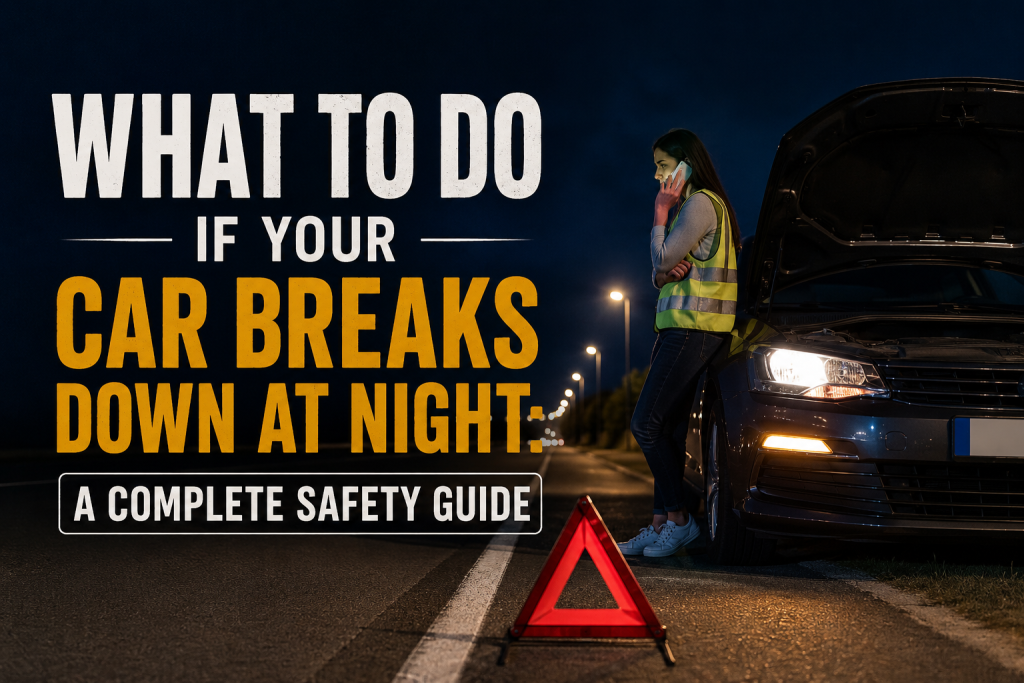
Breaking down on the road is never ideal, but when it happens at night, it can feel even more stressful and dangerous. Reduced visibility, fewer passing vehicles, and unfamiliar surroundings can make the situation overwhelming. However, knowing what steps to take can help keep you safe while you wait for assistance.
In this guide, we will walk you through exactly what to do if your car breaks down at night and how to stay safe until professional recovery arrives.
1. Stay Calm and Assess the Situation
The first thing to remember is not to panic. A vehicle breakdown is frustrating, but staying calm will help you make better decisions.
If you notice warning lights, strange noises, smoke, or a sudden loss of power, try to safely steer your vehicle off the road as soon as possible. Turn on your hazard lights immediately to alert other drivers that your vehicle is experiencing problems.
2. Move to a Safe Location
If your vehicle is still moving, carefully guide it to the safest available location.
Good places to stop include:
- A lay-by
- A service station
- A wide road shoulder
- A parking area
- A quiet side road
Avoid stopping on bends, hill crests, or areas with poor visibility whenever possible.
If you’re on a motorway, aim to reach the hard shoulder or an emergency refuge area if your vehicle can still move safely.
3. Turn On Your Hazard Warning Lights
Your hazard lights are one of the most important safety features during a breakdown.
Keep them switched on so other road users can see your vehicle from a distance. At night, visibility is reduced, making hazards especially important for preventing accidents.
If you have sidelights or parking lights, use them where appropriate to make your vehicle even more visible.
4. Exit the Vehicle Safely
If it is safe to do so, exit the vehicle from the side furthest away from traffic.
Wear a high-visibility jacket if you have one available. Move yourself and any passengers to a safe location well away from moving traffic.
Never stand directly behind or in front of the vehicle, especially on busy roads.
Your safety is far more important than staying with the car.
5. Use a Warning Triangle Only When Safe
A warning triangle can help alert approaching drivers to your presence.
However, never place a warning triangle on a motorway or any road where doing so could put you at risk.
If you’re on a quiet road and conditions are safe, place the triangle a suitable distance behind your vehicle according to local road safety guidance.
6. Call for Professional Breakdown Recovery
Once everyone is safe, contact a professional breakdown recovery service.
When making the call, be prepared to provide:
- Your exact location
- Vehicle make and model
- Registration number
- Description of the problem
- Number of passengers
- Any safety concerns
Providing accurate information helps recovery operators reach you more quickly and with the right equipment.
7. Share Your Location
Modern smartphones make it easy to share your location.
Use:
- Google Maps location sharing
- What3Words
- GPS coordinates
- Nearby road signs or landmarks
The more precise your location, the faster a recovery vehicle can find you, especially at night when visibility is limited.
8. Stay Visible While Waiting
While waiting for assistance:
- Keep your phone charged if possible
- Stay behind safety barriers where available
- Remain in a safe area away from traffic
- Keep children close and supervised
- Continue using hazard lights
If weather conditions are poor, stay somewhere sheltered while remaining visible to recovery personnel.
9. Be Extra Careful on Motorways
Motorway breakdowns require additional caution.
If your vehicle stops on the hard shoulder:
- Exit through the passenger side if possible
- Move behind the safety barrier
- Walk away from traffic
- Call for assistance immediately
Never attempt repairs on a motorway hard shoulder, especially at night.
Common Causes of Night-Time Breakdowns
Many breakdowns that occur at night are caused by issues that develop during the day and worsen over time.
Common causes include:
Flat Batteries
Cold temperatures and electrical usage often contribute to battery failure.
Tyre Problems
Punctures and blowouts can occur unexpectedly, particularly on long journeys.
Engine Overheating
Low coolant levels or mechanical faults may cause overheating.
Alternator Failures
A failing alternator can drain the battery and leave your vehicle without power.
Fuel Issues
Running out of fuel remains one of the most common reasons drivers require roadside assistance.
How to Reduce the Risk of Night-Time Breakdowns
A few simple precautions can significantly reduce the chances of getting stranded.
Before travelling:
- Check tyre pressures
- Inspect fluid levels
- Ensure lights are working properly
- Test your battery regularly
- Keep fuel levels above a quarter tank
- Carry a phone charger
- Keep a torch in your vehicle
- Pack a high-visibility vest
Preventive maintenance is always cheaper and safer than dealing with an emergency breakdown.
Final Thoughts
A car breakdown at night can be stressful, but following the right steps can protect both you and your passengers. Prioritise safety, move to a secure location, make your vehicle visible, and contact a trusted breakdown recovery service as soon as possible.
The most important thing to remember is that your personal safety comes first. Vehicles can be repaired or recovered, but avoiding unnecessary risks during a nighttime breakdown is essential.
If you ever find yourself stranded after dark, professional recovery assistance can help get you back on the road safely and quickly.
