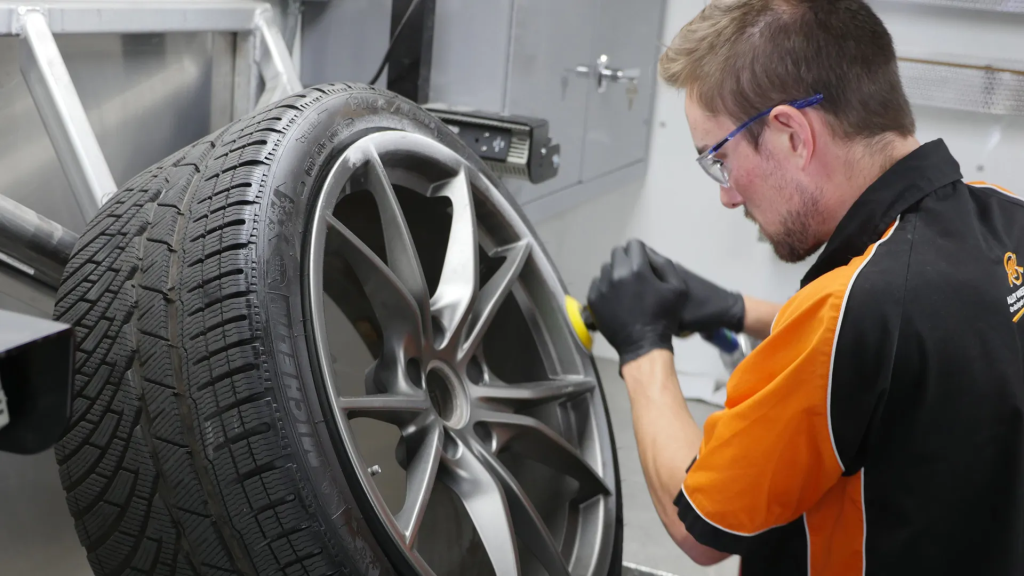
BMW vehicles are known for their engineering, performance, and design. A big part of that design sits at each corner of the car: the alloy wheels. Factory BMW alloys are often wider, lighter, and more precisely finished than wheels found on everyday cars. That makes them more vulnerable to damage and more demanding to repair correctly.
For BMW owners, knowing when and where to get alloy wheel repair is genuinely important. A poorly repaired wheel does not just look bad. It can affect how the car drives and, in serious cases, compromise safety.
Why BMW Alloys Are Different
BMW alloy wheels are engineered to tight tolerances. Many models come fitted with multi-spoke or split-rim designs that require careful handling during any repair work. Diamond-cut finishes are common across the range, from the 3 Series through to the X5. These wheels have a thin, machined outer layer that reflects light in a distinctive way. Once that layer is damaged or poorly restored, the finish looks noticeably wrong.
Standard repair methods used on ordinary alloys often fall short when applied to BMW wheels. The machines, materials, and expertise required are more specific. This is why many BMW drivers search for bmw alloy wheel repair near me rather than accepting a general repair shop.
Common Types of Alloy Wheel Damage on BMWs
- Kerb damage is the most frequent issue. It tends to affect the outer lip of the wheel and is usually caused by parking close to a kerb. On BMW alloys with a polished or diamond-cut edge, this type of damage is highly visible.
- Buckles and bends happen when a wheel strikes a pothole or speed bump at speed. A buckled wheel throws the car off balance, creating a vibration through the steering wheel. BMW suspension is finely tuned, so even a small buckle can be felt more readily than on other cars.
- Corrosion and flaking can develop on older wheels, particularly in areas with heavy road salt use during winter. Clear coat failure allows moisture to get underneath the finish, causing it to lift and peel.
- Cracks are the most serious type of damage. A cracked alloy wheel should be inspected by a professional immediately. Air can escape from a crack in the tyre bead area, creating a slow or sudden loss of pressure.
What a Good Repair Process Involves
A proper BMW alloy repair starts with a full inspection. The wheel is checked for structural integrity before any cosmetic work begins. A cracked or badly buckled wheel may not be suitable for repair, and a reputable workshop will say so clearly rather than attempt a fix that will not last.
For diamond-cut wheels, the repair process involves precision lathe work. The wheel is mounted and rotated while a cutting tool removes a very fine layer of material from the surface. This recreates the machined finish. A clear protective coat is then applied over the top. The result, when done correctly, is a surface that matches the original factory finish closely.
Powder coating is used when a full colour restoration is needed. A dry powder is applied electrostatically and then cured in an oven. The resulting finish is hard, durable, and resistant to chips and corrosion. Powder coating also allows colour changes, which some BMW owners choose to personalise their wheels.
When looking for bmw alloy wheel repair near me, it is worth checking that the workshop has experience with diamond-cut finishes specifically. Not all repair centres have the right lathe equipment for this type of work.
How to Choose a Repair Specialist
There are several things worth checking before booking a repair.
- Ask about their equipment. Diamond-cut alloy repair requires a CNC lathe. A shop that does not have one cannot restore a diamond-cut finish to its original standard.
- Check for a warranty. A confident repair shop will back its work with a written guarantee. This is especially important for powder coating and diamond-cut work, where quality can vary widely between providers.
- Look at example work. Before-and-after images of completed BMW repairs give a realistic idea of the standard of finish you can expect.
- Read reviews carefully. General positive reviews are useful, but look for mentions of BMW-specific repairs. These give a better indication of whether the shop has genuine experience with prestige alloys.
When Is Replacement the Better Option?
Not every damaged alloy wheel can or should be repaired. If the structural integrity of a wheel is compromised, replacement is the only safe option. A wheel with a crack that has spread, or one that has been repaired previously in the same area, may not hold up to further work. A good repair specialist will always be honest about this assessment rather than take your money for a repair that will not deliver a safe result.
FAQs
- Can all BMW alloy wheels be repaired? Most cosmetic damage can be repaired, including kerb scuffs, peeling clear coat, and light buckles. Cracked or severely bent wheels need individual assessment. Some damage makes repair impractical or unsafe.
- How long does a BMW alloy repair take? Most single-wheel repairs are completed within one to two working days. Some workshops offer same-day turnaround for lighter scuff repairs.
- Will a repaired BMW alloy look exactly like the original? A high-quality diamond-cut repair comes very close to the factory finish. Colour-matched powder coating can also produce excellent results. The quality depends heavily on the equipment and skill of the repair technician.
- Does alloy repair affect tyre pressure or safety? A properly completed repair should not affect tyre pressure. Before any cosmetic work, a responsible workshop checks the wheel for structural issues that could affect safety.
- Is it worth repairing alloys on an older BMW? In most cases, yes. Factory BMW alloys are expensive to replace, and a good repair is significantly cheaper than buying a new or used wheel. Keeping the original alloys also helps maintain the car’s value.
