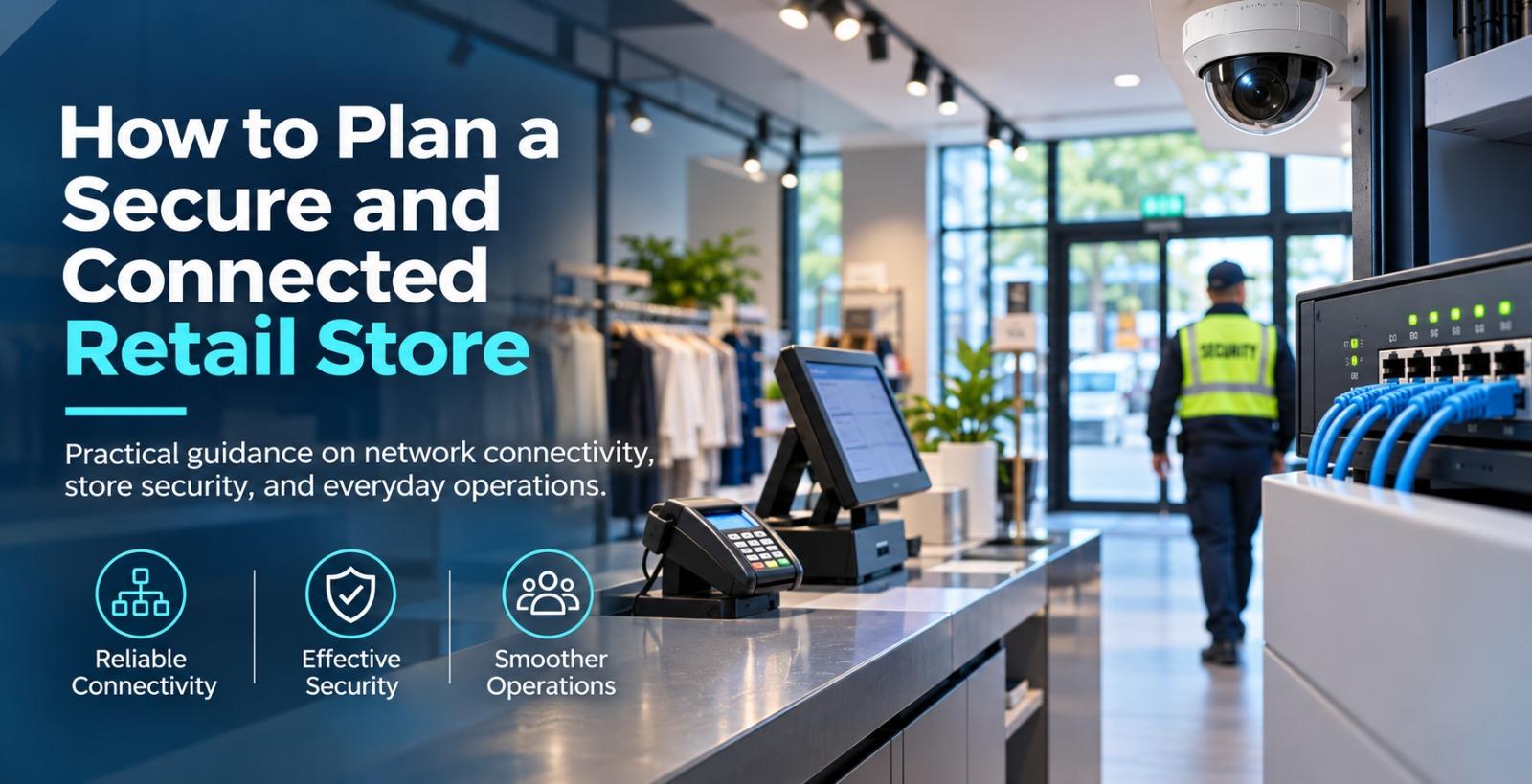
Opening or expanding a retail store involves more than choosing a location, arranging products, and attracting customers. Businesses also need reliable technology, suitable security arrangements, and clear procedures that keep everyday operations running smoothly.
Retailers depend on connected payment terminals, inventory management platforms, communication devices, and monitoring equipment. At the same time, they must protect their premises, employees, customers, and valuable merchandise against potential risks.
A well-planned retail environment combines dependable connectivity with practical physical protection. Understanding how these elements support daily operations helps business owners make informed decisions and avoid unnecessary expenses.
Understand Your Store’s Operational Requirements
Every retail store has different requirements depending on its size, product range, opening hours, and customer activity.
A small clothing shop may need two checkout terminals, inventory software, wireless connectivity, and cameras near important areas. A larger retail outlet may require additional payment stations, connected stockroom equipment, and more extensive security arrangements.
Before purchasing equipment, review how employees complete their daily responsibilities. Consider how transactions are processed, how inventory is updated, and how customers move through the store.
This assessment helps identify essential systems and possible weaknesses.
For example, if every checkout terminal depends on a single network connection, an unexpected outage could interrupt sales. Recognising this dependency early gives the business an opportunity to consider backup connectivity and alternative operating procedures.
Build a Reliable Network for Retail Operations
Reliable network connectivity is essential for modern retail businesses. Payment terminals, office computers, wireless access points, printers, and stock management equipment often depend on the same infrastructure.
An unreliable connection can lead to delayed transactions, communication failures, and difficulties accessing important business information.
Retailers should begin by counting their connected devices and identifying which equipment requires a wired or wireless connection.
Network switches are especially important because they connect devices within a local network and direct traffic between them.
Businesses evaluating Cisco Switches should consider the number of available ports, supported network speeds, management capabilities, and Power over Ethernet requirements.
For example, a shop with four checkout terminals, two office computers, three cameras, and two wireless access points may need eleven device connections if each uses a dedicated wired connection.
The final switch size should also account for uplinks and reasonable future expansion.
Choosing equipment based on actual requirements helps businesses maintain reliable connectivity without purchasing unnecessary capacity.
Keep Payment and Customer Networks Separate
Many retailers offer internet access to customers while using the same building infrastructure for business applications.
Although this arrangement can be convenient, customer connectivity should not provide unrestricted access to payment terminals, inventory systems, or internal business devices.
Appropriate network separation helps reduce this risk.
Businesses may use separate wireless networks and configured network segments to control communication between different groups of devices.
However, proper configuration remains essential. Simply creating separate network names does not automatically provide adequate protection.
Retailers should also keep supported equipment updated, restrict administrative access, and follow applicable payment security requirements.
Employees should understand how to identify suspicious payment activity and report technical problems promptly.
These precautions help protect business information while maintaining convenient connectivity for authorised users.
Identify Physical Security Risks Before Opening
Every retail property has areas that require different levels of protection.
Entrances, checkout counters, display areas, stockrooms, and delivery points are common locations where businesses should assess potential risks.
The type of merchandise also matters. A store selling expensive electronics may require stronger protection around product displays than a shop selling lower-value everyday items.
Managers should examine the building layout and identify locations where visibility is limited.
Poor lighting, obstructed sightlines, and unrestricted access to storage areas may create avoidable vulnerabilities.
Retailers should also consider what happens outside normal opening hours. Properties containing valuable equipment and inventory may require additional attention when employees are absent.
A practical assessment helps identify suitable improvements without introducing unnecessary costs.
Consider Security Coverage Outside Business Hours
Protecting a retail property becomes particularly important when the store is closed.
Although alarms and cameras can provide valuable information, businesses may also need arrangements for checking the premises and responding to suspicious activity.
The right approach depends on the property’s location, size, operating hours, and overall risk assessment.
For businesses managing retail parks or commercial premises in the UK, mobile security patrols can provide scheduled or varied visits by trained security officers.
These visits may include checking entrances, examining vulnerable areas, identifying signs of damage, and reporting unusual activity according to agreed procedures.
Before selecting a provider, businesses should review relevant licensing, insurance, patrol arrangements, reporting procedures, and escalation responsibilities.
The objective is to establish appropriate protection that reflects the property’s actual risks.
Position Cameras Where They Provide Useful Coverage
Camera placement should be determined by practical monitoring requirements rather than installing equipment wherever space is available.
Retailers often prioritise entrances, checkout counters, stockrooms, delivery areas, and locations containing valuable merchandise.
Lighting conditions and viewing angles can influence the quality of recorded footage.
For example, a camera facing strong sunlight may struggle to capture clear images unless its positioning and technical capabilities are suitable.
Shelving and display units can also create blind spots.
Businesses should review the store layout before installing cameras and reassess coverage whenever major changes are made.
Recording capacity is another important consideration. The system must support the intended number of cameras and provide appropriate storage for the required retention period.
Camera placement and recording practices should also comply with relevant privacy requirements.
Protect Stockrooms and Delivery Areas
Stockrooms contain valuable merchandise and are often accessed by employees, suppliers, and delivery personnel throughout the day.
Clear procedures can help businesses manage these activities more effectively.
Retailers should identify who is authorised to enter storage areas and how incoming goods are checked.
For example, employees receiving deliveries should follow a consistent process for confirming quantities, recording damaged products, and reporting missing items.
Restricted areas should remain accessible only to authorised personnel.
Where appropriate, electronic entry controls can help businesses manage access permissions and maintain records of entry activity.
However, technology should support established procedures rather than replace them.
Regular inventory checks and clear employee responsibilities can help identify discrepancies before they become larger financial problems.
Prepare for Technical Problems and Power Interruptions
Unexpected equipment failures can disrupt retail operations even when the store has suitable technology.
A network outage may affect payment processing, inventory updates, or communication with other business locations.
Power interruptions can also disable connected equipment and monitoring devices.
Businesses should identify their most important systems and establish practical recovery procedures.
For example, managers should understand whether their payment provider supports an approved backup connection or an authorised alternative transaction process.
Selected equipment may also benefit from suitable backup power arrangements.
Employees should know whom to contact when problems occur and what actions are permitted while systems remain unavailable.
Testing recovery procedures before an incident can reveal weaknesses and improve operational readiness.
Train Employees to Recognise and Report Problems
Technology and security procedures are most effective when employees understand their responsibilities.
Retail staff should receive practical training covering payment equipment, stock handling, visitor procedures, emergency arrangements, and incident reporting.
Training should match individual job requirements.
Checkout employees may need instructions for handling payment device concerns, while stockroom personnel may require guidance on delivery checks and restricted areas.
Managers should encourage employees to report unusual activity, technical problems, and potential hazards promptly.
Clear communication helps reduce confusion and ensures concerns reach the appropriate person.
Training should also be reviewed whenever equipment, procedures, or employee responsibilities change.
Review Your Store as the Business Grows
Retail requirements rarely remain unchanged.
A business may introduce additional checkout equipment, expand its product range, rearrange the shop floor, or increase staffing levels.
These changes can affect network capacity, camera visibility, and security procedures.
Regular reviews help identify whether existing arrangements remain suitable.
For example, adding new display shelves could create monitoring blind spots, while introducing additional connected devices may increase network demand.
Managers should consider equipment performance, maintenance costs, operational risks, and employee feedback when deciding which improvements deserve attention.
Planning for future changes can reduce unnecessary replacements and help businesses maintain more dependable operations.
Conclusion
A secure and connected retail store depends on reliable technology, appropriate physical protection, and clear operational procedures.
Business owners should assess their connectivity requirements, protect sensitive systems, identify property risks, and prepare employees for unexpected disruptions.
Regular maintenance and periodic reviews help ensure that these arrangements continue meeting the store’s requirements.
The best retail infrastructure is not necessarily the most expensive. It is the combination of practical systems and procedures that protects valuable assets while allowing employees to serve customers efficiently.
