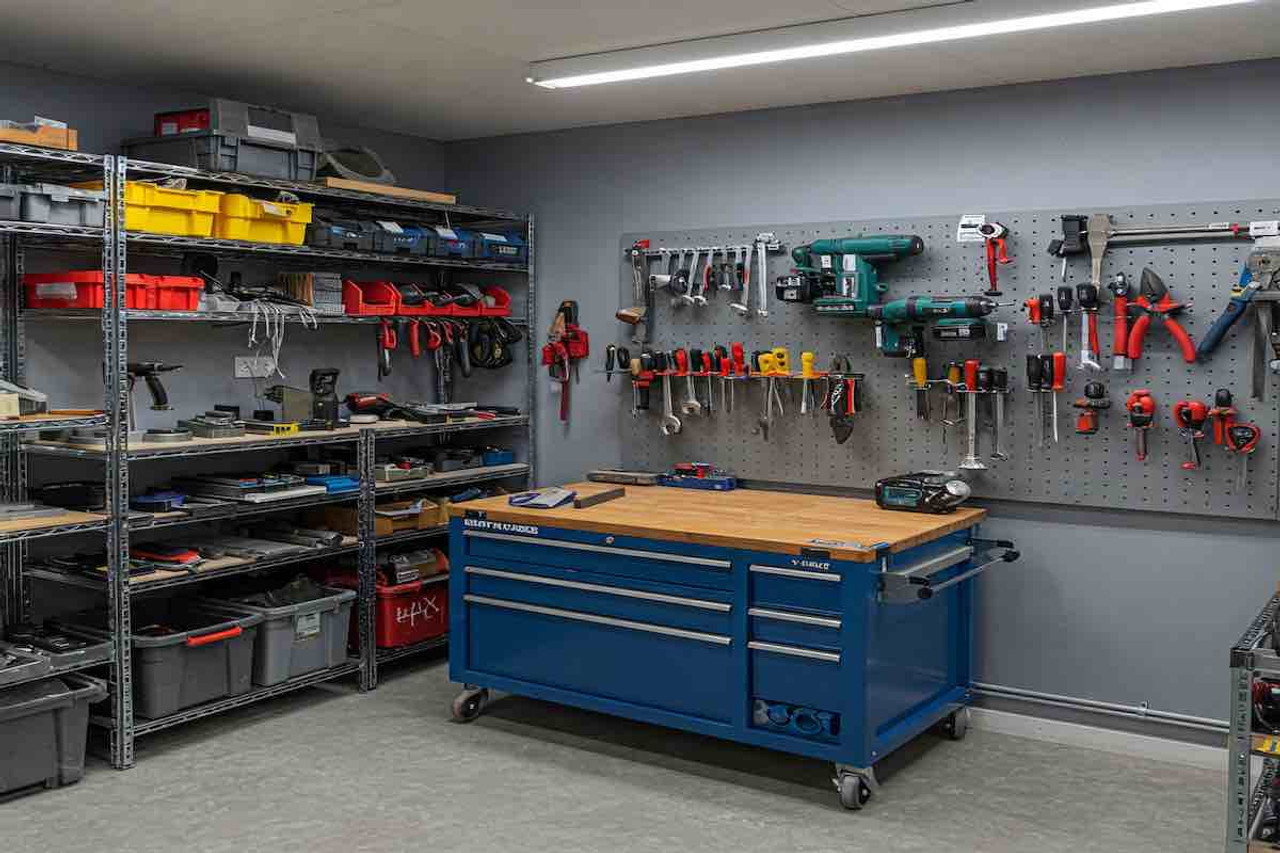
Efficient organization of tools, precision instruments, and small parts is a critical, yet often overlooked, factor in maintaining productivity and safety in workshops, maintenance bays, and assembly areas. Disorganized storage leads to time wasted searching for items, increases the risk of tool loss or damage, and can contribute to workplace clutter and hazards. A large-capacity, dedicated storage system like a Pro Series 7-Ft 22 Drawer Stainless Steel Storage Chest provides a structured solution to centralize and secure a vast array of items, directly supporting efficient operations.
Technical Overview and Design Philosophy
This product is a substantial, freestanding storage unit constructed from stainless steel, featuring 22 individual drawers of various sizes. The design focuses on durability, security, and logical organization. The use of stainless steel as the primary material is a key differentiator from standard painted steel cabinets.
Core Functions and Organizational Strategy
- High-Density Storage: The multiple drawer configuration allows for the separation and categorization of thousands of individual items, from small fasteners and electrical components to larger hand tools and gauges.
- Secure Containment: Lockable drawers protect valuable, sensitive, or controlled tools and parts from loss, unauthorized use, and environmental contaminants like dust and moisture.
- Workspace Integration: The flat, reinforced top surface can serve as a secondary workbench or a staging area for projects, adding functional space to the work area.
- Mobility and Placement: Often equipped with heavy-duty casters, these chests can be positioned precisely where needed and relocated as workflows change.
The Importance of Organization for Efficiency and Safety
Time spent searching for tools is non-productive time. A well-organized storage chest can reduce retrieval time to seconds, directly increasing technician productivity. Furthermore, proper storage reduces the risk of trip hazards from loose tools, prevents damage from tools being piled together, and ensures that calibrated or delicate instruments are kept in protected, dedicated spaces. This organized approach is foundational to lean manufacturing and maintenance principles.
Technical Fundamentals and Selection Criteria
Choosing the right storage chest requires evaluation beyond mere drawer count. Key specifications and considerations include:
- Construction Material and Gauge: Stainless steel offers superior corrosion resistance, durability, and ease of cleaning compared to carbon steel. A thicker gauge steel provides greater rigidity and security.
- Drawer Configuration and Weight Capacity: The variety of drawer depths accommodates different item sizes. Each drawer should have a rated load capacity to ensure smooth operation when full. Full-extension drawer slides provide complete access to contents.
- Locking System: A central locking mechanism that secures all drawers with one key is essential for security and convenience.
- Mobility and Stability: Heavy-duty casters with locking brakes are necessary for moving a loaded chest. The unit must be stable when stationary to prevent tipping.
- Dimensions and Footprint: The 7-foot height and overall footprint must be compatible with the available space in the workshop or bay, considering ceiling height and aisle space.
Factors Affecting Long-Term Usability and Performance
The performance of the storage system depends on user discipline in maintaining organization. Overloading drawers beyond their rated capacity can damage slides and mechanisms. The work surface top must be kept clear of excessive weight or impacts that could cause deformation. Regular cleaning, especially in environments with metal dust or corrosive agents, will maintain the appearance and function of the stainless steel surfaces and drawer slides.
Safety Considerations and Operational Best Practices
While a storage chest promotes safety, improper use can create risks.
- Always engage the wheel locks when the chest is in its working position to prevent unintended movement.
- Load drawers evenly and do not exceed the manufacturer’s stated weight capacity for each drawer to prevent failure or tipping.
- When opening multiple drawers, open the heavier, lower drawers first to maintain a low center of gravity and stability.
- Use the provided handles for opening drawers; do not pry them open with tools.
- Ensure the Stainless Steel Storage Chest is placed on a level, solid floor capable of supporting its fully loaded weight.
Equipment Types and Complementary Systems
The primary unit is the storage chest or cabinet. The market includes variations in material (stainless, painted steel), drawer count, specialized drawer inserts (foam, dividers), and integrated features like built-in power strips or lights. Complementary products include wall-mounted shadow boards, mobile service carts, and secure lockers for larger equipment.
Advantages and Practical Limitations
A clear assessment of the system’s role ensures it meets operational needs.
- Advantages: Provides massive, secure, and organized storage in a single footprint. Durable stainless steel construction resists corrosion and is easy to clean. Enhances tool control and inventory management. Improves technician efficiency and shop cleanliness. The flat top adds valuable usable space.
- Limitations: Represents a significant initial investment. Requires dedicated floor space. Is not designed for bulk storage of very large, heavy items like power tools or engine blocks. Optimal organization requires an initial time investment to sort and assign items to drawers.
Real-World Application Scenario
In an automotive or industrial equipment maintenance facility, each technician is responsible for a large set of personal and specialty tools. A 7-foot, 22-drawer stainless steel chest allows a technician to organize all wrenches, sockets, diagnostic tools, and replacement parts by size and function. The locked drawers secure tools after hours, and the mobile unit can be rolled to the job site. This eliminates time wasted walking to a central tool crib and searching through disorganized boxes, directly increasing wrench time and job throughput.
Conclusion and Industry Outlook
For facility managers, maintenance supervisors, and operations leads, investing in professional-grade storage like a high-capacity stainless steel chest is an investment in foundational operational efficiency. It addresses the critical link between tool accessibility and workforce productivity. The trend in industrial organization is moving toward even more specialized storage solutions with integrated inventory management, such as tool tracking systems and connected cabinets. However, the physical robustness and organizational logic of a heavy-duty storage chest remain paramount. Implementing such systems, coupled with clear organizational protocols, is a definitive step toward a safer, more efficient, and more professional working environment.
