Your posts lean because the ground let go, not because somebody bought cheap pickets. Good fencing Bolivar Peninsula TX work starts from that fact, since loose beach sand over a shallow water table gives a concrete collar almost nothing to squeeze. Pour a bigger blob down the hole and you have built a heavier object for the sand to move. What holds a line straight is embedment depth, backfill compacted in lifts, and post spacing chosen for real ground. That is the argument. The rest is why it is true, written down after walking a year-old fence last spring.
Peninsula Sand Gives A Post Almost Nothing To Grip
Sand grains are round, and round grains roll. Clay grips a post and stays gripped. Loose beach sand barely grips at all, so every gust that leans on the panel nudges those grains into a new arrangement. A fence passes its walkthrough in November and sits out of plumb by March. Nothing broke; the soil just shifted, a fraction at a time, until the post found an angle it liked better.
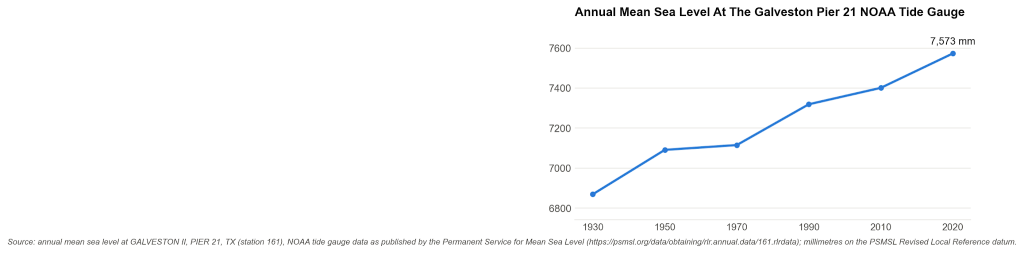
The water table matters as much as the grains do. The Permanent Service for Mean Sea Level publishes the annual record for the Galveston Pier 21 gauge, station 161. That published series climbs from roughly 6,869 mm in 1930 to 7,573 mm in 2020 on its own reference datum. Call it 70 centimetres across ninety years. Higher water means the bottom of your post hole spends more of the year wet than it did a generation ago. Saturated sand carries less load than dry sand.
Depth is the lever that works, and highway engineers sorted this out decades ago. Texas Transportation Institute Research Report 405-1 specifies a minimum soil embedment depth of 38 inches for a guardrail post. That is a post whose entire job description is getting hit by a car. Nobody is running a sedan into your side yard. The point is the ratio, since engineers buy holding power with depth rather than a wider puddle of concrete. Job after job, the leaning posts we pull here are set shallow and collared fat.
Depth And Compacted Backfill Beat Bigger Concrete Collars
Here is the rule of thumb worth remembering. If a post is buried at least a third of its length below grade and backfilled in compacted lifts, skip the oversized collar. If it is not, no amount of concrete rescues it. Backfill in lifts means six inches of material, tamped, then the next six, instead of dumping the hole full. Skipping the collar does not mean skipping cost control, because the wood is not cheap. The Random Lengths framing lumber composite sat at $487 per thousand board feet this spring, real money once you buy posts twice.
Concrete is no escape hatch. Buildermuse tracked ready-mix at $399.62 per cubic yard in April 2026, up 2.0% year over year. Every extra collar poured around a post is a line item somebody pays for. In practice the collars we chip out of failed fences are bigger than the ones under fences still standing straight. Volume was never the variable.
Spacing carries its share, which is why we quote peninsula jobs by the post count. Panels at 8-foot spacing put a long lever arm on every post, and a long lever arm in sand turns a straight line into a slow wave. Tighten the spacing and each post carries less wind, so each one has less reason to rotate. It costs a few more holes and bags, and it saves the reset.
Before any of that, call 811. Texas requires the notice and the Railroad Commission enforces it, so you make one free call and wait the two working days. Locators come out and mark the gas and electric lines crossing your yard. Peninsula lots hide shallow service runs, abandoned irrigation, and whatever the last owner buried and forgot. A post hole digger through a live gas or electric line has killed people, and no fence schedule is worth that. (Yes, even for four posts along a side yard, and especially then.)
How deep should a fence post go in loose sand?
Start at a third of the post length below grade, then go deeper if the hole keeps sloughing in. A standard 8-foot 4×4 on a 6-foot fence wants roughly 32 inches of embedment as a floor. On soft peninsula sand we usually push past that, because sand offers its resistance by depth.
Do I even need concrete around the post?
Sometimes, but far less of it than people expect. Well-graded gravel backfill, compacted in lifts, drains the post base and grips nearly as well as a collar in sandy ground. It also lets you reset a post later without a demolition project. Where we do use concrete, it goes in as a modest collar over a compacted base.
Is my fence leaning or are the panels failing?
Grab the post itself and push. A post that rocks while its panel stays square is a soil problem. A fence that stays plumb at the posts while the pickets bow is a material problem. Check five or six posts down the run before deciding, because one loose post is a bad hole and six is a bad method.
A Post Set Right Outlasts The Panels Above It
Depth and compaction, and the whole trick costs nothing but time.
A post set for the ground it is actually in should still be plumb when the pickets have gone silver. That is the honest test for fencing Bolivar Peninsula TX crews. Not how the fence looks the week it goes up, but whether it is still straight after two Gulf winters have worked it over. Ask whoever quotes your job what embedment depth they set to, how they backfill, and what spacing they picked for sand. If the answer comes back as a concrete volume, keep calling. The ground here is not going to change, so the method has to.
