
Introduction
Designing a bedroom for teenage guys is less about decoration and more about understanding how the space will actually be used. A well-planned bedroom should support study, rest, and downtime, while still leaving room for personality. In interior design, this balance is what turns a basic room into a space that feels natural and lived-in.
Drawing inspiration from approaches seen on sites like EClife Interiors, the key is to follow a clear process—starting with function and building toward style. At EClife, we often approach bedroom designs for teenage guys in the same way: practical first, then layered with details that reflect the individual.
Methods: Practical Design Ideas That Actually Work
1. Start with Function and Daily Use
Before choosing colors or furniture, think about how the room will be used. A teenage guy’s bedroom is rarely just for sleeping—it’s also a place for studying, gaming, relaxing, and spending time with friends.
This step helps define what the room needs: a comfortable bed, a proper desk, storage, and possibly a small seating area. Good interior design always starts with function, not decoration.
2. Build the Room Around Essential Furniture
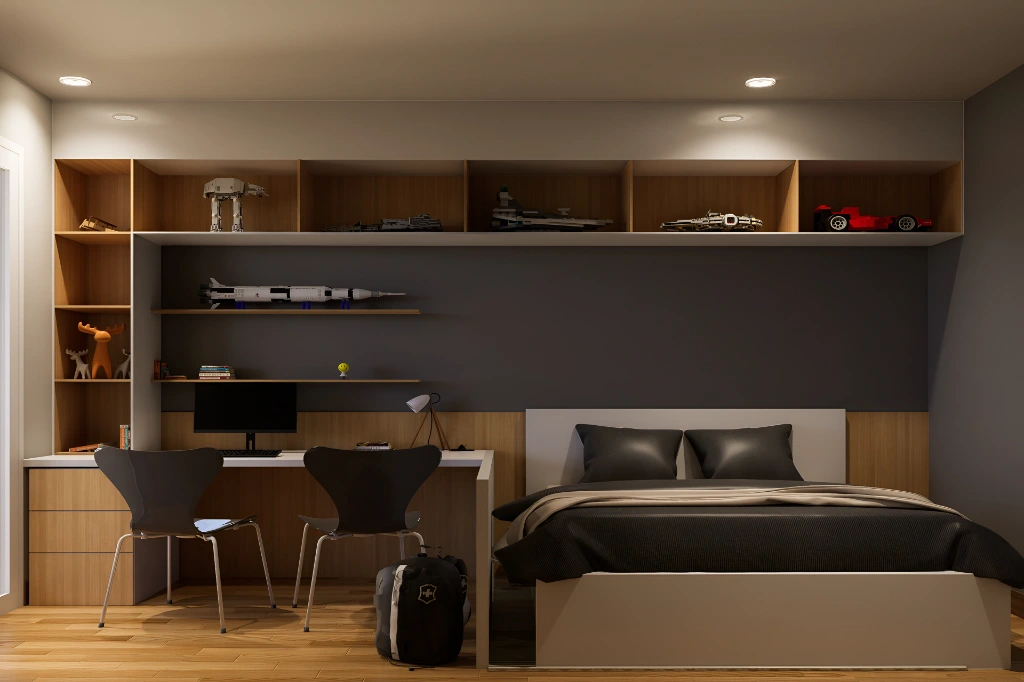
A strong foundation makes everything easier. The basics should include:
- A bed (preferably larger for long-term use)
- A desk and chair
- Storage for clothes and personal items
- Lighting for both work and relaxation
These core pieces shape the entire room. In many modern house layouts, keeping furniture simple but well-scaled helps the space feel more organized and less cluttered.
3. Choose a Balanced, Mature Color Palette
One of the most effective bedroom designs for teenage guys is based on a neutral foundation with a few strong accents. Mid-tone wood, white or grey walls, and darker tones like navy or black create a space that feels mature without being too heavy.
This kind of palette also makes it easier to update the room over time. Instead of redesigning everything, small changes—like bedding or wall art—can refresh the look.
4. Use Materials to Add Depth Instead of Clutter
Rather than relying on too many decorative items, focus on materials. Wood, metal, leather, and fabric textures can add interest without making the room feel busy.
In interior design, this approach creates a more grounded and comfortable environment, especially in a young person’s room where simplicity often works better than overstyling.
5. Define Zones Within the Room
Even in a smaller space, dividing the room into zones can make it more functional. For example:
- A sleeping area centered around the bed
- A study zone with a desk
- A relaxed corner for reading or gaming
This is one of the most practical home office ideas applied to a bedroom setting, helping the space support different activities without feeling chaotic.
6. Leave Room for Personal Expression
A teenage guy’s room should never feel overly controlled. Allow space for personal items—posters, photos, collections, or a pinboard.
This is where the room becomes unique. In many cases, the best design ideas come from letting the user shape the final details rather than designing everything upfront.
7. Keep Decoration Simple and Flexible
Trends change quickly, especially for young people. Instead of committing to bold, permanent features, use elements that can be easily updated—like artwork, textiles, or lighting.
This keeps the room adaptable and avoids the need for frequent redesigns, which is especially important in a growing home.
Conclusion
Designing a bedroom for teenage guys is ultimately about creating a space that works for real life. By starting with function, choosing practical furniture, and keeping materials and colors consistent, it’s possible to build a house that feels both comfortable and personal.
The most successful bedroom designs for teenage guys are not overly styled—they are thoughtful, flexible, and easy to live in. With the right balance of structure and freedom, a bedroom can grow alongside its user, becoming a natural part of the home rather than just another room in the house.
