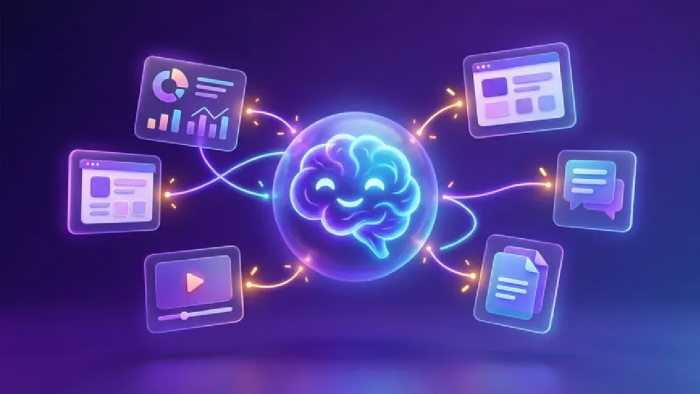
A strong visual reference can communicate an idea in seconds. A carefully composed photograph can establish a mood, a product image can suggest an entire brand direction, and a cinematic still can communicate lighting, composition, atmosphere, and storytelling without explaining any of it.
The challenge begins when that visual idea needs to become something reproducible.
For years, recreating a visual concept with generative AI meant manually describing what was visible: the subject, camera angle, lighting, colors, environment, composition, lens characteristics, artistic style, and overall mood. The process can be surprisingly difficult because people tend to describe images in broad terms while image-generation systems often respond to much more specific visual information.
This is where image-to-prompt AI has become increasingly useful.
Instead of starting with a blank text box, creators can begin with an existing image and use AI vision technology to translate the visual reference into a structured, reusable prompt.
Why Images Are Often Better Starting Points Than Words
Human beings naturally communicate visually. A designer may know exactly what a desired campaign should look like but struggle to express that vision in a paragraph. A photographer might recognize a particular lighting setup immediately without knowing the technical terminology needed to describe it. An art director may have a reference board containing dozens of images that collectively define a visual direction.
Generative AI reverses this traditional workflow.
Rather than asking someone to translate an image into words manually, an image-to-prompt system can analyze the reference and identify important visual characteristics, including subjects, spatial relationships, composition, lighting, color palette, texture, style, and atmosphere.
The resulting prompt becomes a bridge between visual inspiration and machine-readable creative direction.
This is particularly valuable when the goal is not simply to describe an image, but to recreate its visual language in another generation.
What an Image-to-Prompt System Actually Analyzes
A useful image-to-prompt workflow goes beyond identifying objects.
If an image contains a person standing in a city, for example, a basic caption might simply say that it shows a person in a city. That description loses much of the information that makes the original image visually distinctive.
A more useful analysis considers questions such as:
- Where is the subject positioned within the frame?
- What is the apparent camera angle?
- Is the composition symmetrical or intentionally offset?
- What is the primary light source?
- Is the lighting soft, dramatic, diffused, or directional?
- What colors dominate the scene?
- How shallow or deep is the apparent depth of field?
- What visual style does the image suggest?
- What environmental details contribute to the mood?
- Is the image editorial, cinematic, commercial, documentary, illustrative, or surreal?
These details can then be synthesized into a prompt that is substantially more useful for generative workflows.
The goal is not to claim that an AI system can recover the exact original prompt used to create an image. In most cases, that original prompt is unknowable. Instead, the system reverse-engineers the observable visual characteristics and converts them into a new description capable of guiding another generation.
That distinction matters.
From Image Description to Creative Reconstruction
This process can be thought of as visual reverse engineering.
Imagine finding a product photograph with a particular studio aesthetic: a dark background, controlled rim lighting, subtle reflections, a carefully positioned camera, and a shallow depth of field.
A conventional image caption might identify the product and its environment. An image-to-prompt workflow attempts to capture the reason the photograph looks the way it does.
That can produce a much more actionable creative brief.
For designers and artists, this creates a practical starting point for experimentation. Instead of repeatedly guessing which combinations of adjectives might reproduce a particular aesthetic, they can begin with an analysis of the reference and modify the resulting prompt.
This is especially useful when creating variations.
A creator can preserve the composition and lighting while changing the subject. A marketer can retain a visual style while adapting the product. An artist can use the extracted description as a foundation for developing an entirely new scene.
In other words, the reference image becomes more than inspiration. It becomes structured creative information.
Why Prompt Structure Matters
Not every long prompt is a good prompt.
Generative systems respond differently depending on the model, but useful prompts generally benefit from clear descriptions of the subject, environment, composition, lighting, style, and desired visual characteristics.
For technical workflows, structured output can be even more valuable than a single paragraph.
An image analysis system can produce machine-readable information about detected objects, colors, composition, and style. That information can then be stored, searched, transformed, or passed into another application.
This opens possibilities beyond individual image generation.
For example, a creative organization with thousands of reference images could use structured image analysis to build a searchable visual library. Instead of relying exclusively on filenames and manually written tags, images could be associated with machine-generated descriptions and visual attributes.
Developers can also use this type of information as part of automated creative pipelines.
Image-to-Prompt for Designers and Creative Teams
For individual creators, the benefit is speed. For professional teams, the larger advantage can be consistency.
Suppose a brand has established a visual identity built around a particular combination of lighting, composition, color treatment, and photography style. New team members may understand the brand guidelines conceptually but still interpret them differently.
Reference images can provide a stronger common language.
An image-to-prompt workflow can turn those references into detailed creative descriptions that designers, marketers, photographers, and AI operators can discuss and iterate on.
This does not replace creative judgment. Instead, it reduces the amount of repetitive translation required between visual references and textual instructions.
For teams experimenting with multiple image-generation systems, that distinction becomes increasingly important.
Choosing the Right Output for Different AI Models
Another consideration is model compatibility.
Different image-generation platforms interpret prompts differently. A prompt that works well in one environment may require modification for another because models differ in how they interpret descriptive language, styles, composition instructions, and technical parameters.
That is why a useful image-to-prompt workflow should ideally treat the extracted prompt as a creative foundation rather than a rigid final command.
Creators can then adapt the output for the model they intend to use, whether that means a photorealistic generation workflow, illustration, product visualization, concept art, typography, or another specialized use case.
Modern platforms increasingly support multiple image models, making this flexibility particularly useful. VideoInPrompt, for example, provides image-prompt analysis alongside access to image-generation workflows and supports model-oriented creative workflows across tools such as Flux, GPT Image, Ideogram, Nano Banana, and Seedream. citeturn0view0
The Connection Between Image-to-Prompt and Image Generation
The most interesting development is that extraction and generation are no longer necessarily separate workflows.
A creator might begin with an existing image, extract its visual characteristics, modify the resulting prompt, and then generate a new image from that refined description.
This creates a feedback loop:
Reference → Analysis → Prompt → Generation → Refinement
The process can continue until the generated result reaches the desired direction.
For creators who frequently experiment with generative imagery, this can be considerably more efficient than starting from scratch for every concept.
It also changes how people think about prompting. Prompt engineering becomes less about memorizing isolated keywords and more about understanding the relationship between visual intent, descriptive language, and model behavior.
Where Image-to-Prompt Technology Is Going
The long-term significance of image-to-prompt technology extends beyond generating better descriptions.
As visual AI systems become more capable, images can increasingly function as structured sources of creative information. A single reference can potentially contribute to automated tagging, creative briefs, prompt libraries, content generation, search systems, and production workflows.
That is particularly relevant for companies managing large volumes of visual content.
The same underlying concept is also appearing in video workflows. Instead of analyzing a single static frame, video-to-prompt systems can examine sequences, camera movement, scene changes, timing, and other dynamic characteristics. This expands the idea of reverse-engineering from static visual composition into motion and cinematography.
For creators interested in that workflow, video-to-prompt technology provides a natural next step from analyzing individual images.
Likewise, once a prompt has been developed, creators can move in the opposite direction and use AI image generation to turn their refined creative instructions into new visual assets.
The broader trend is clear: generative AI is gradually making the boundary between visual references and textual instructions less rigid.
A Better Way to Think About Prompting
The biggest advantage of image-to-prompt technology may not be that it produces longer prompts.
It is that it gives creators another way to begin.
Instead of asking, “What words should I type to create this?” the starting question becomes, “What visual qualities make this reference work?”
AI can then help translate those qualities into a form that generative systems can understand and that humans can refine.
That makes prompting less of a guessing exercise and more of an iterative creative process.
The strongest workflows will likely combine both sides: human visual judgment and machine-assisted visual analysis. Humans decide what matters, what should change, and what creative direction to pursue. AI helps translate those decisions into structured instructions that can be tested, reproduced, and adapted.
For anyone working seriously with generative imagery, that shift is significant. The reference image is no longer merely something to look at. With the right tools, it can become the starting point for a complete creative workflow.
