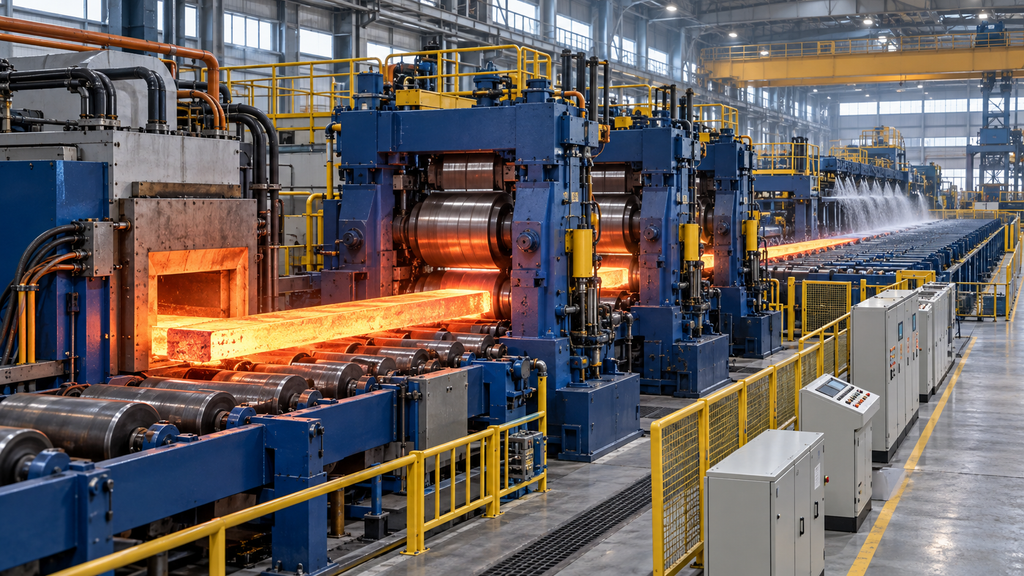
Rolling efficiency depends heavily on what happens before the first stand. If billets enter the mill too cold, deformation becomes difficult and rolling force rises. If they are overheated, scale loss, surface defects, and energy waste can increase. Controlled heating gives the mill a better starting point for stable production.
A complete rolling mill series should be planned together with the reheating or induction heating stage. The mill layout, stand arrangement, cooling bed, shear, and finishing equipment all depend on billet size, target product, and required output.
Using an induction heating furnace before rolling can give plants fast temperature response and compact installation. Because heat is generated directly in the billet surface and body, the system can support flexible starts, shorter heating time, and easier temperature adjustment for changing production schedules.
Project support is also important. A supplier with strong global service capability can help with layout review, installation guidance, commissioning, spare parts, and operator training. For rolling lines, small alignment or control problems can quickly affect product quality, so technical support should be considered part of the equipment decision.
Good billet heating practice includes consistent charging, accurate temperature measurement, stable conveying speed, and proper coordination with the first rolling stand. The operator should avoid long delays between heating and rolling because billet temperature can drop quickly, especially in smaller sections.
When heating and rolling are treated as one process, the plant can improve dimensional control, reduce cobbles and interruptions, and make better use of installed mill capacity. The right heating system does more than raise temperature. It protects the rhythm of the rolling line and supports predictable product quality.
