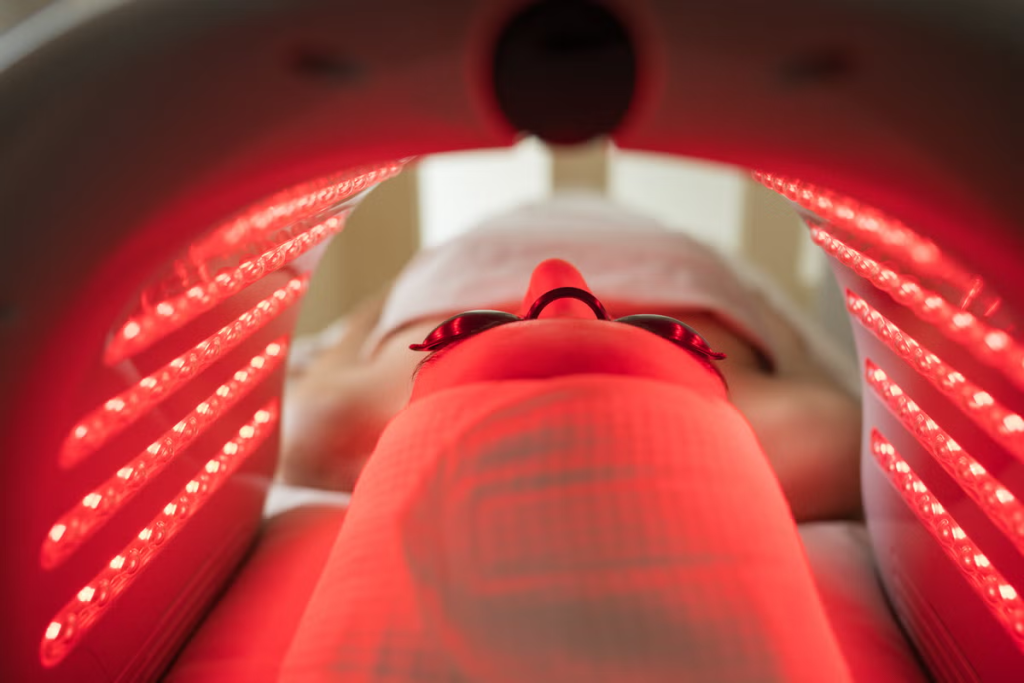
Red light therapy has gone from a niche clinical tool to one of the most searched skin treatments on the internet. It is showing up in clinics, wellness centres, and beauty conversations across the UK. But what exactly is it, and does it live up to the hype?
This article breaks down what red light therapy is, how it works, who it is suitable for, and what the science currently says.
What Is Red Light Therapy?
Red light therapy, sometimes called photobiomodulation or low-level light therapy, uses specific wavelengths of red and near-infrared light to interact with the skin and underlying tissue. These wavelengths, typically between 630 and 850 nanometres, can penetrate beyond the surface of the skin to reach the cells beneath.
The idea is that when these light wavelengths reach the cells, they stimulate the mitochondria. The mitochondria are the energy-producing parts of a cell. When they absorb the light, they produce more energy, which the cell then uses to carry out repair and regeneration processes.
This is not the same as UV light. Red light therapy does not damage the skin or increase the risk of sunburn. It is considered non-invasive and painless.
What Can It Be Used For?
The potential uses of red light therapy cover a wide range of skin and wellness goals. Research has explored its effects on several areas.
- Collagen production. One of the most widely reported benefits is that red light stimulates collagen synthesis. Collagen is the protein that keeps skin firm and plump. As we age, collagen levels naturally decline, which leads to fine lines, sagging, and a loss of elasticity. Studies have found that regular red light exposure can help slow this process and support the skin’s own repair systems.
- Wound healing and inflammation. Red light therapy has been used in clinical settings to support recovery from wounds, injuries, and certain skin conditions. Its anti-inflammatory effects are thought to play a role here. Some research has looked at its use for conditions such as acne and rosacea, where inflammation is a key factor.
- Muscle recovery. Beyond skin, red light therapy is used in sports science. Athletes have used it to support muscle recovery, reduce post-exercise soreness, and improve performance over time.
- Hair and scalp health. There is growing clinical interest in red light therapy as a support for hair loss, particularly androgenetic alopecia. Research suggests it may help stimulate follicle activity and improve hair density.
Is There Solid Science Behind It?
The honest answer is: yes, but with caveats. There is a growing body of peer-reviewed research supporting the benefits of red light therapy for skin health, wound healing, and pain management. Several studies published in dermatology and photomedicine journals have found measurable improvements in skin texture, tone, and firmness after regular treatment.
However, the research is still developing. Studies vary in terms of the wavelengths used, session length, and frequency of treatment. This makes it difficult to make sweeping claims about what results a person should expect. Anyone considering red light therapy should speak with a qualified clinician who can assess whether it is appropriate for their individual needs and skin type.
What Does a Session Look Like?
In a clinical setting, a session typically involves sitting or lying near a light panel or device for a set period, usually between 10 and 20 minutes. The treatment is painless. Most people describe feeling a gentle warmth. There is no downtime, and most people return to normal activities immediately afterwards.
Multiple sessions are generally recommended to see results. Clinicians typically suggest a course of treatments spaced over several weeks, followed by maintenance sessions.
Who Is It Suitable For?
Red light therapy is generally considered safe for most adults. It is non-invasive and does not involve needles, chemicals, or UV exposure. However, it may not be suitable for people with certain light-sensitive conditions or those taking medications that cause photosensitivity. A consultation with a medical professional is the best way to determine whether it is the right treatment for you.
It is worth seeking treatment in a clinic with trained staff rather than relying solely on home devices. Clinical-grade equipment delivers more consistent wavelengths and controlled dosing, which makes results more predictable.
Final Thoughts
Red light therapy is not a magic solution, but it is a well-researched, low-risk treatment with a growing evidence base. For anyone looking to support skin health, reduce signs of ageing, or complement other aesthetic treatments, it is worth a serious look. As with any treatment, the quality of the provider and the equipment matters significantly.
