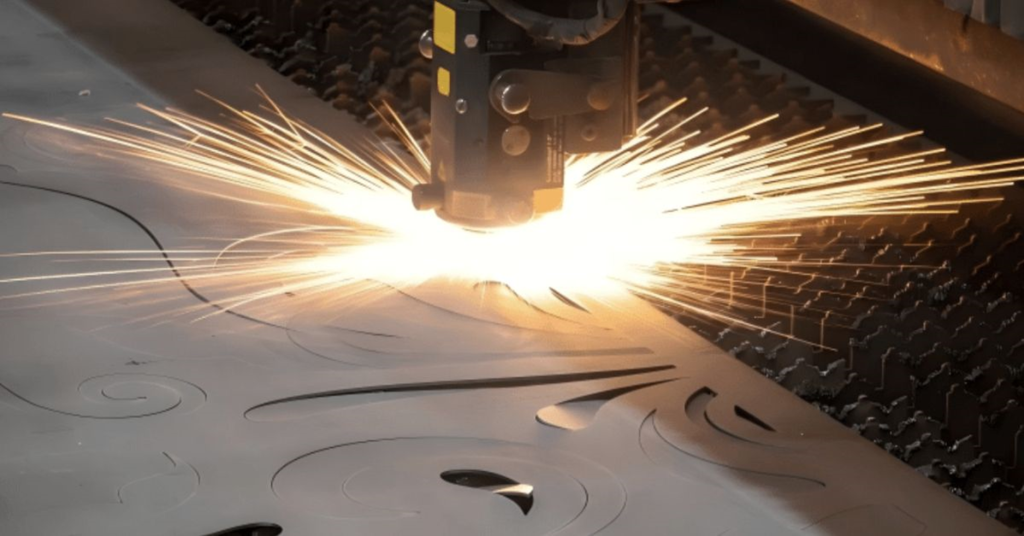
If you’ve ever wondered how modern manufacturing achieves such clean, strong, and precise metal joints, the answer often lies in laser welding. Instead of relying on open flames or bulky electrodes, today’s advanced welding systems use concentrated beams of light to fuse metal with remarkable accuracy.
As industries push for faster production, tighter tolerances, and cleaner results, the laser welder has quickly become a preferred solution for everything from consumer electronics to aerospace components. Understanding how laser welding works isn’t just useful for engineers. If you’re involved in fabrication, repair work, prototyping, or industrial maintenance, knowing the physics behind heat, light, and metal interaction helps you make better decisions about equipment, processes, and quality control. This guided overview walks you through the fundamentals—from the nature of laser light to the step-by-step mechanics of a weld—and explains why laser welding has become a defining technology in modern manufacturing.
Fundamentals of Laser Welding
What a Laser Is
A laser isn’t simply a bright beam of light. It is coherent, monochromatic, and highly directional. “LASER” stands for Light Amplification by Stimulated Emission of Radiation, a process that forces atoms to emit identical photons. These photons travel in perfect alignment, allowing the beam to be tightly focused into a single, high-energy point. When concentrated through a lens, the power density becomes intense enough to melt metal instantly.
Types of Lasers Used in Welding
Several laser types can be used for welding, but three dominate:
- Fiber lasers – The most common today, prized for stability, efficiency, and compact design.
- CO₂ lasers – Gas-based systems offering high penetration, often used for thick materials.
- Solid-state Nd: YAG lasers – Popular for pulsed welding in precision applications.
Fiber lasers have overtaken older systems because they deliver excellent beam quality in a small form factor and handle many metals with minimal difficulty.
Heat Generation Mechanism
The welding process begins when laser photons strike the metal surface. The energy is absorbed, rapidly heating a tiny area until it melts. At higher intensities, the metal vaporizes, creating a “keyhole”—a narrow cavity filled with vapor. This cavity traps the laser energy, causing deeper penetration and resulting in a strong, narrow weld seam.
The Physics of Metal Interaction
Keyhole Welding vs. Conduction Welding
Laser welding operates in two main modes:
- Conduction mode, where the surface melts but doesn’t vaporize. Welds are shallow and wide.
- Keyhole mode, where vaporization creates a cavity that draws the beam deeper. Welds are narrow, deep, and ideal for structural strength.
Keyhole mode is the most recognized advantage of laser welding because it delivers exceptional penetration with minimal heat spread.
Material Absorption and Reflectivity
Not all metals absorb light equally. For example:
- Aluminum and copper are highly reflective and require optimized settings.
- Oxidized or coated surfaces often absorb better.
- Surface cleanliness directly affects the weld result.
This explains why pre-weld preparation matters even for high-precision laser welding.
Thermal Behavior and the Heat-Affected Zone (HAZ)
Compared to traditional methods, a laser welder creates an extremely small HAZ. Because cooling happens rapidly, the metal experiences minimal distortion—one of the reasons laser welding is ideal for thin materials, intricate components, and assemblies requiring tight tolerances.
Key Components of a Laser Welding System
Laser Source and Power Module
This generates the beam, typically ranging from 1,000 to 6,000 watts in industrial settings.
Optical Fiber Delivery
A flexible fiber-optic cable guides the beam with minimal loss.
Welding Head and Focusing Optics
Lenses and collimators shape and concentrate the beam into an intense focal point.
Motion Control and Positioning
Depending on the setup, you may use a robotic arm, gantry, or handheld interface to move the beam accurately along the weld seam.
Shielding Gas System
Shielding gases like argon or helium prevent oxidation and keep welds clean.
Cooling System
Laser sources and optics require cooling—either air- or water-based—to maintain consistent output during high-duty cycles.
The Step-by-Step Laser Welding Process
1. Preparation
Cleanliness is essential. Oil, rust, and paint can cause porosity or inconsistent penetration, so a thoroughly prepared surface ensures better quality.
2. Beam Delivery and Focus
The beam is focused to a point typically between 0.1 and 0.6 mm. Smaller spot sizes increase power density and penetration.
3. Melting and Keyhole Formation
As the focused beam strikes the surface, the metal melts—and at higher power levels, vaporizes—to form the keyhole.
4. Motion and Travel Speed
Welding speed directly affects penetration depth. Too fast, and the weld becomes shallow; too slow, and overheating may occur.
5. Solidification and Cooling
As the keyhole closes behind the laser, the molten metal solidifies, forming a clean, uniform seam with minimal spatter.
Types of Laser Welding Techniques
Continuous Wave (CW) Welding
Used for deep, long welds that need consistent penetration.
Pulsed Laser Welding
Best for thin metals or parts sensitive to heat.
Remote Laser Welding
Uses mirrors and scanners to weld at high speeds without moving a physical torch.
Handheld and Portable Laser Welding
These flexible tools allow repairs and fabrication even outside traditional workshop settings.
Advantages of Laser Welding
High Precision and Minimal Distortion
The concentrated beam keeps heat input low, reducing the risk of warping.
Fast Speeds and High Productivity
Laser welding can be significantly faster than TIG or MIG in many applications.
Clean, Narrow, Strong Welds
Reduced spatter and oxidation means less cleanup and better aesthetics.
Material Versatility
A single system can weld stainless steel, carbon steel, aluminum, copper, and even mixed metals.
Challenges and Considerations
Material Reflectivity and Thickness Limits
Highly reflective metals or extremely thick materials may require special settings or hybrid welding methods.
Joint Fit-Up Requirements
Laser welding demands precise alignment because the beam is so narrow.
Operator Training and Safety
Proper handling, shielding, and safety gear—especially eye protection—are essential.
Equipment Costs
Laser systems have a higher initial price but often offer lower long-term operating costs.
Applications Across Industries
Automotive
Used for body panels, EV batteries, and sensor components.
Aerospace
Ideal for high-integrity welds in lightweight alloys.
Electronics
Micro-welding for battery tabs, contacts, and intricate components.
Medical
Used in surgical tools and implant manufacturing.
Manufacturing and Fabrication
Supports everything from sheet metal work to custom assemblies and robotic production lines.
The Role of Modern Laser Welders in Today’s Industry
Precision and Reliability for Advanced Manufacturing
Modern systems deliver a consistent, stable beam quality essential for demanding applications.
Integration with Automation
Laser welders pair seamlessly with industrial robots and programmable motion systems.
Portable and Handheld Options
Newer designs allow technicians to bring high-precision welding directly to job sites, reducing downtime.
The Contribution
Companies like Denaliweld offer industrial-quality laser welding systems designed for durability, control, and real-world performance. Their technology helps users achieve clean, reliable welds across a range of applications.
Conclusion
Laser welding represents an elegant intersection of physics, engineering, and material science. By focusing light into an incredibly intense point, a laser welder gives you the power to create clean, strong welds with remarkable consistency. From automotive fabrication to aerospace components and precision electronics, this technology continues to reshape how metal is joined. As industries evolve, advanced systems from innovators will play a crucial role in bringing greater precision, flexibility, and efficiency to modern welding workflows.