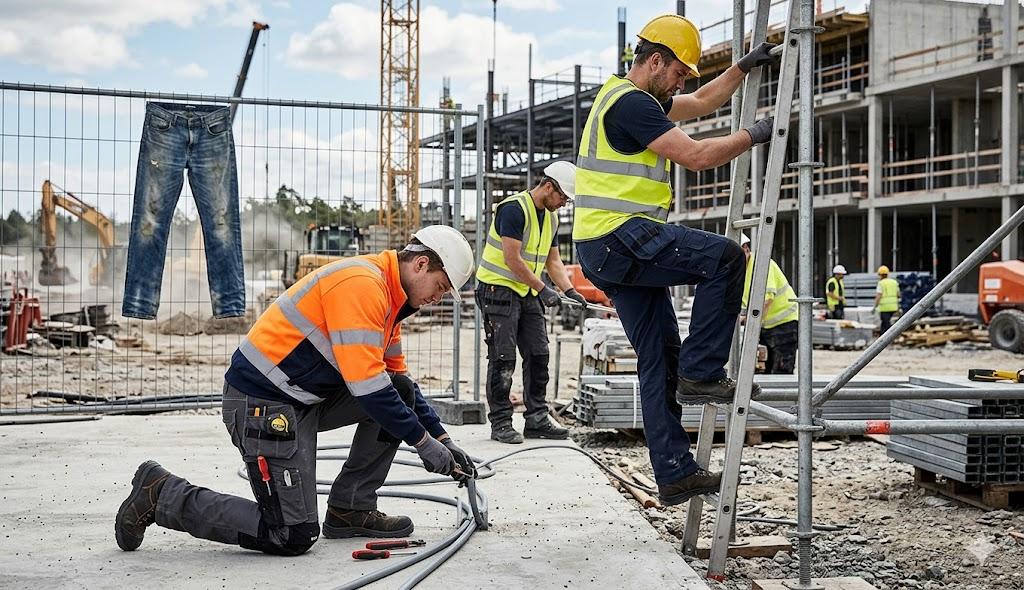
Denim has been the dominant material for construction wear for decades. But now you go to any construction site, and there is a revolution in its fashion. Those old heavy blue jeans are quickly fading into oblivion. The focus of tradespeople now is on modern, more convenient, climatically flexible workwear. Because when you are working with heavy materials, climbing scaffolding and working all day long while sitting on cold hard concrete surfaces, the only tool you have is the clothes you wear.
And this is why modern workwear includes specialized cargo work trousers. Together with the necessary safety attire, such as hi vis trousers for high-risk areas, the modern workwear is created to stand the brutal physical demands of the construction process that the old denim just could not meet.
The Death of Denim on the Job Site
Jeans were chosen by tradespeople because heavy cotton duck and denim could take a lot of beating. But as technologies advanced, the drawbacks of the material were apparent. Denim is inflexible and does not allow any movement when it gets moist from rain or sweat. Not only does it become heavy but also irritates the skin.
Also, there is no innovation regarding pockets. It is not comfortable to try to carry a utility knife, smartphone, architectural drawings and screws in five pockets. Every time the tradesperson bends over, metal items will chafe against their leg, causing bruises or at least restriction in movement.
Why Cargo Work Trousers Are Winning the Shift
Modern pants use the principles of textile engineering. Unlike static and inflexible denim, cargo work pants are made from various advanced fabrics that include poly-cotton blends and advanced ripstop materials. These fabrics use mechanical stretch fibers, such as elastane, that provide the freedom of movement during squatting, crouching, and ladder climbing.
Cargo pants have a better system of storage compared to those jeans. The geometric design of the pockets allows distributing the weight evenly over the legs and not putting pressure on the waistline. There are separate pockets for pens, rulers, and smartphones so that the tradesperson can easily find the needed instrument without wearing a cumbersome tool belt.
Comfort, Durability and Joint Protection
In addition to ease of storing, there is another big reason why the switch happens – ergonomics. One of the most obvious disadvantages of the standard jeans is lack of knee pads. A construction worker spends much of his working shift kneeling down in order to put floor, lay skirting boards or examine wires at a low level.
The most advanced cargo work trousers usually feature special top-loading knee pad pockets. A person may simply insert lightweight foam or gel inserts directly into the trouser pockets. The joints are protected against permanent pain, with no need to strap on external knee pads that pinch the backs of the legs. Plus, triple stitching and reinforced Cordura fabric in areas subject to high abrasion make cargo trousers far more durable than classic jeans.
Thermoregulation and All Weather Performance
Compliance with weather conditions is another important factor pushing the switch. Classic jeans act like a sponge in the rain and like an oven during hot summer days. Advanced cargo trousers feature special moisture-wicking fabric that moves sweat away from the skin and helps the wearer stay cool.
During complex civil engineering or highway construction projects, safety requirements demand particular visibility tiers. You can easily wear hi vis vests over a light summer T-shirt, thus fulfilling upper-body visibility requirements. But the lower part of your body still needs protection, and choosing versatile cargo trousers that keep you cool while resisting tears from rogue rebar is critical.
Conclusion
The switch is not just a whim of fashion. It is an upgrade in both workplace productivity and physical comfort. By switching to cargo work trousers, a professional makes the right decision because these trousers actively help throughout the workday. Perfect mobility, built-in knee pad compatibility, and excellent pocket functionality make cargo work trousers the new standard for the modern tradesperson.
Frequently Asked Questions
Are cargo work trousers as durable as heavy-duty denim jeans?
Yes, they often surpass denim in durability. While denim is thick, it is prone to ripping at the crotch and knees under repetitive stress. Cargo workwear uses reinforced stitching, gusseted crotches, and abrasion-resistant materials like Cordura in high-wear zones to prevent blowouts.
Can I wear cargo work trousers for welding or hot work?
It depends entirely on the fabric composition. Standard poly-cotton or synthetic cargo pants can melt when exposed to sparks. If you do welding, grinding, or hot work, you must look for cargo trousers specifically rated as flame-retardant (FR) and made from 100% treated cotton or aramid fibres.
Do these trousers shrink in the wash like standard jeans do?
Most technical work trousers are pre-shrunk during the manufacturing process. Because they use synthetic blends like polyester mixed with cotton, they hold their shape, size, and colour significantly better than 100% cotton denim after multiple industrial washes.
How do the knee pad pockets work in cargo trousers?
Most designs feature hidden slots on the exterior or interior of the knee area. You simply purchase compatible foam or gel inserts, fold them slightly, and slide them into these pockets. They remain securely in place while you walk but provide instant cushioning the moment you kneel down.
Are there waterproof versions of cargo trousers available for winter?
Yes. Many manufacturers offer winterized variants that feature a durable water repellent (DWR) coating on the exterior shell and a fleece or thermal lining on the inside to keep you dry and warm during harsh outdoor shifts.
