AI image generation has gone through a rapid evolution over the past two years. The earliest tools impressed people with their novelty, then frustrated them with their limitations. Getting a usable result often meant learning an entirely new skill: prompt engineering. You had to know the right keywords, the right syntax, and the right combination of style modifiers to coax the AI into producing something that looked professional.
That friction kept a lot of people on the sidelines. Business owners, marketers, educators, and content creators could see the potential, but the learning curve felt like trading one complex tool for another.
The latest wave of AI image generators takes a different approach entirely, and it is worth paying attention to.
From Commands to Conversations
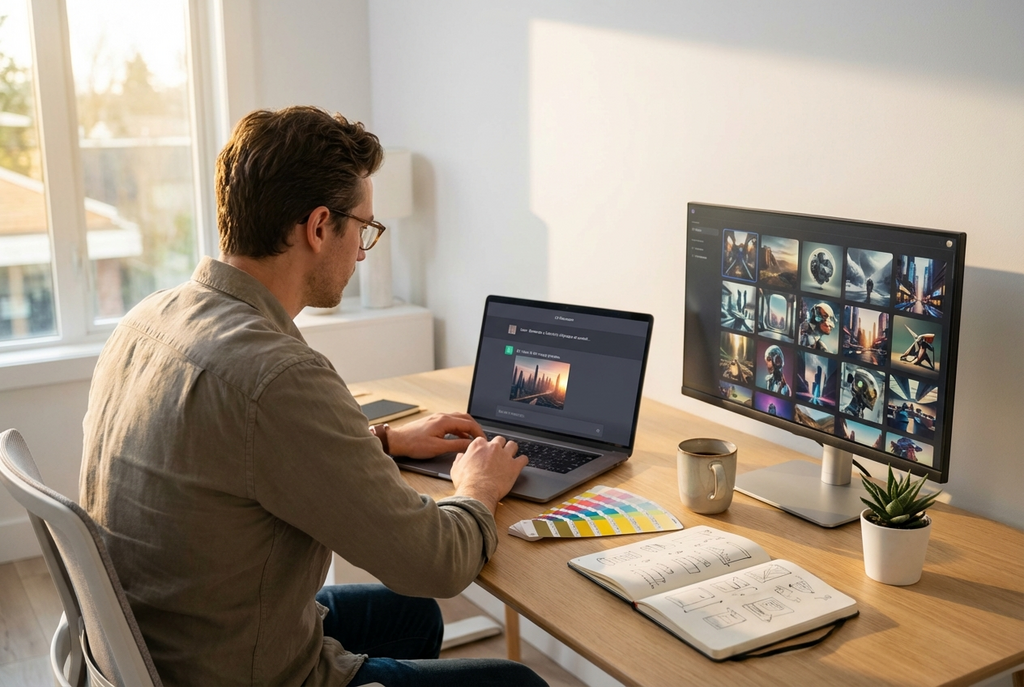
The biggest shift in recent AI image tools is the interface. Instead of crafting prompts with technical parameters, you describe what you need in plain language. The AI generates an image, and you refine it through follow-up messages. “Make the lighting softer.” “Move the text to the upper left.” “Try a version with a darker background.”
This conversational workflow mirrors how you would direct a human designer. You explain the concept, review the draft, and provide feedback until the result matches your vision. There is no special vocabulary to memorize and no syntax to get wrong.
For professionals who create visual content regularly, this removes one of the biggest bottlenecks in the production process. You can go from concept to finished image in minutes rather than hours.
Where This Matters Most
The practical applications extend far beyond making pretty pictures. Here are some areas where chat-based image generation is already proving its value:
Marketing and social media. Managing brand visuals across multiple platforms means dealing with different aspect ratios, seasonal themes, and constant demand for fresh content. A tool that lets you generate and iterate quickly can replace the back-and-forth with a design team for routine assets.
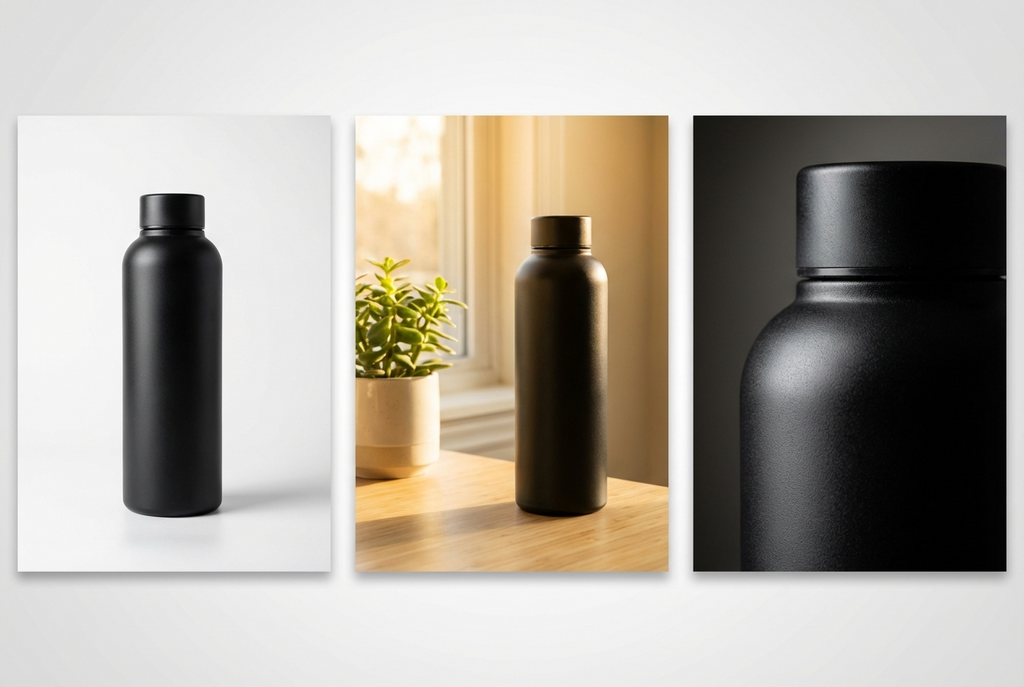
E-commerce product imagery. Professional product photography costs $30 to $50 per shot and scales poorly when you are listing hundreds of SKUs. AI-generated product images on white backgrounds, lifestyle scenes, and detail shots can handle the volume at a fraction of the cost.
Education and training. Creating diagrams, annotated illustrations, and multilingual materials has always been time-consuming. When the AI can render accurate text inside images across languages, educators save hours of manual work.
Content creation. Thumbnails, blog headers, social media posts, and presentation visuals all follow the same pattern: you know what you want, you just need a fast way to produce it.
What Separates a Useful Tool from a Novelty
Not every AI image generator delivers results you can actually use for professional work. A few capabilities separate the serious tools from the toys:
Resolution matters. If your images need to work on high-density screens, in print materials, or on marketplace listings, you need output at 4K or higher. Many tools still cap at 1K or 2K, which looks acceptable on a phone screen but falls apart anywhere else.
Text rendering is still rare. This is the biggest gap in most AI image tools. Ask them to generate an image with a logo, a headline, or product label text, and the letters come out distorted or unreadable. For anyone creating branded content, this is a dealbreaker.
Aspect ratio flexibility saves rework. A single visual concept might need to exist as a landscape banner, a square social post, a vertical story, and a wide-format ad. Tools that support multiple aspect ratios from a single generation eliminate the cropping and reformatting step entirely.
Multi-turn memory preserves context. The ability to refine an image through conversation only works if the tool remembers what you asked for previously. Otherwise, every adjustment starts from scratch, and the iterative workflow breaks down.
A Practical Example
To make this concrete, consider Banana AI, a chat-based image generator built on Google’s Gemini models. It offers three model tiers in a single interface: Nano Banana for quick concept drafts, Nano Banana 2 for balanced speed and quality with 14 aspect ratios including ultra-wide formats, and Nano Banana Pro for high-fidelity output with precise text rendering at full 4K resolution.
The workflow is straightforward. You open a chat, describe the image you need, and receive a result in seconds. If the composition is right but the lighting needs adjustment, you say so. If you want to see the same concept in a different aspect ratio for a different platform, you ask. The tool maintains context across the conversation, so refinements build on previous outputs rather than restarting from zero.
For users who want to study effective prompting techniques, the platform also provides a curated library of Banana Prompts with examples across categories like product photography, portraits, and marketing visuals. It is a practical resource for understanding what kinds of descriptions produce the best results.
Pricing follows a credit-based model starting at $9.9 per month for 500 credits. There is a free tier with 10 credits and no credit card requirement, which gives you enough room to test the tool against your actual use cases before making a decision.
The Bigger Picture
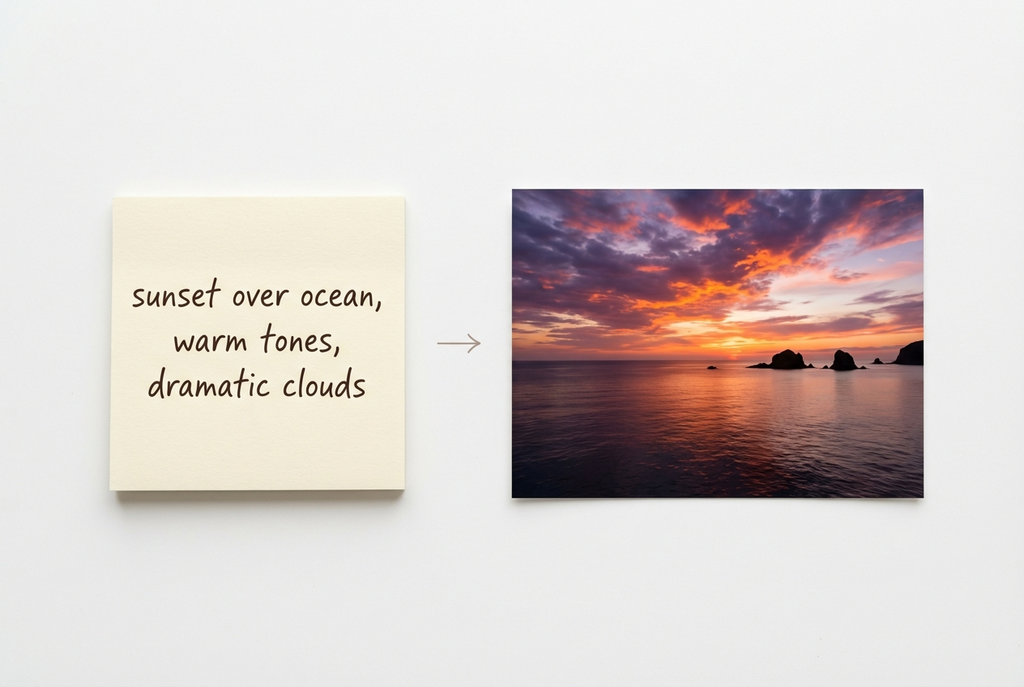
The shift from prompt-based to conversation-based AI image generation is part of a broader trend: AI tools becoming accessible to the people who actually need them, rather than the people who know how to operate them.
For professionals and business owners, the question is no longer whether AI can produce usable visuals. It clearly can. The question is whether you are using the right tool for the job. The ones built around conversation, high-resolution output, and accurate text rendering are pulling ahead because they solve the problems that kept earlier tools from being practical.
If you have tried AI image generators before and walked away unimpressed, the current generation is worth a second look. The tools have matured significantly, and the gap between “AI-generated” and “professionally produced” is narrower than most people realize.

