High-performance aluminum materials have become increasingly important in modern manufacturing, especially where lightweight structures and high mechanical strength are required. Among these materials, 7075 aluminum is recognized as one of the strongest commercially available aluminum alloys, offering an excellent balance between strength, weight reduction, and machinability.
However, obtaining consistent results in 7075 aluminum machining requires more than simply selecting the material. Engineers must consider heat treatment conditions, cutting tools, material forms, and machining strategies to maintain dimensional accuracy and surface quality.
What Makes 7075 Aluminum Different?
The outstanding performance of 7075 aluminum comes from its alloy composition, primarily zinc combined with magnesium and copper. After proper heat treatment, the material achieves significantly higher strength than many conventional aluminum grades.
Some of the most important 7075 aluminum properties include:
l High tensile and yield strength
l Excellent strength-to-weight ratio
l Good fatigue resistance
l Reliable dimensional stability after machining
l Strong performance under dynamic loading conditions
These 7075 aluminum alloy properties make it suitable for precision mechanical components where reducing weight without sacrificing structural integrity is a major design objective.
Another important design parameter is the modulus of elasticity of aluminum 7075. Although its stiffness is lower than steel, its low density allows engineers to create lightweight structures with favorable mechanical performance.
For engineers comparing different grades and manufacturing methods, technical information about variousengineering-grade aluminum materials and their processing characteristics can provide additional insight into material selection decisions.
Comparison of 7075 Aluminum and Steel
Material selection often involves evaluating 7075 aluminum vs steel because both materials are widely used for high-strength components.
Property
7075 Aluminum
Typical Carbon Steel
Density
Approximately 2.8 g/cm³
Approximately 7.8 g/cm³
Weight
Much lighter
Significantly heavier
Strength-to-weight ratio
Excellent
Moderate
Corrosion resistance
Generally good
Depends on coating or alloy
Machining efficiency
High
Usually lower
The comparison demonstrates why engineers frequently choose aluminum when minimizing component weight is more important than achieving maximum stiffness.
Heat Treatment Conditions and Their Influence on Performance
The mechanical behavior of 7075 aluminum changes significantly according to its temper condition.
Common conditions include:
7075-T6
7075 aluminum T6 is produced through solution heat treatment and artificial aging. This condition delivers very high strength and hardness, making T6 7075 aluminum one of the preferred choices for precision structural parts.
7075-T651
7075 T651 aluminum alloy receives an additional stress-relieving stretching process after heat treatment. This helps reduce internal residual stress and minimizes deformation during high-precision machining.
Choosing the proper temper depends on the final application, dimensional tolerance requirements, and expected mechanical loads.
Challenges During 7075 Aluminum Machining
Although aluminum is generally considered an easy-to-machine material, machining 7075 aluminum requires careful control because of its higher hardness.
Common manufacturing challenges include:
l Increased cutting force compared with softer aluminum grades
l Faster wear of cutting tools
l Higher sensitivity to inappropriate cutting parameters
l Possible dimensional changes caused by residual stress
Nevertheless, the overall 7075 aluminum machinability remains excellent compared with many engineering metals when suitable processes are applied.
Tool Selection Considerations
Selecting the best end mill for 7075 aluminum depends on the desired surface finish, production volume, and component geometry.
Machining specialists commonly recommend:
l Solid carbide end mills for improved rigidity
l Sharp cutting edges to reduce built-up edge formation
l Proper flute design for effective chip evacuation
l Optimized cutting speed and feed rates to control heat generation
A well-balanced machining strategy often produces better results than relying on a single tool feature.
Available Material Forms for Precision Components
7075 aluminum is supplied in multiple semi-finished forms, allowing manufacturers to choose materials according to the shape of the final component.
Typical options include:
l 7075 aluminum bar stock for brackets, fixtures, and general machined components
l 7075 aluminum rod for shafts, pins, and rotational parts
l Plates and blocks for complex CNC milling applications
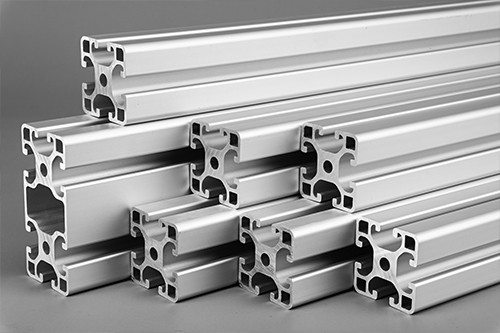
l Extruded profiles for components requiring customized cross-sectional geometry
When a design requires special shapes before final machining, understanding custom aluminum extrusion manufacturing methods can help improve material efficiency and reduce unnecessary material removal .
The correct raw material selection can reduce machining time, lower material waste, and improve overall manufacturing consistency.
Practical Engineering Considerations When Using 7075 Aluminum
Before selecting this alloy for a project, engineers usually evaluate several practical factors:
Advantages
l Exceptional strength among aluminum alloys
l Excellent weight-saving capability
l Good machining performance
l Suitable for high-precision components
Limitations
l Lower corrosion resistance compared with some 6000-series aluminum alloys
l Reduced weldability due to alloy composition
l Higher material cost compared with common aluminum grades
A balanced understanding of these factors helps designers determine whether 7075 aluminum is the most suitable engineering solution.
Final Thoughts
The popularity of 7075 aluminum is closely related to its combination of low weight and outstanding mechanical strength. From understanding 7075 aluminum properties to selecting the appropriate heat treatment and machining strategy, every stage influences the final quality of precision components.
Successful 7075 aluminum machining depends on proper material selection, optimized tooling, and controlled manufacturing parameters. As modern industries continue to demand lightweight and high-performance components, this advanced aluminum alloy remains an important option for engineers and manufacturers worldwide.

