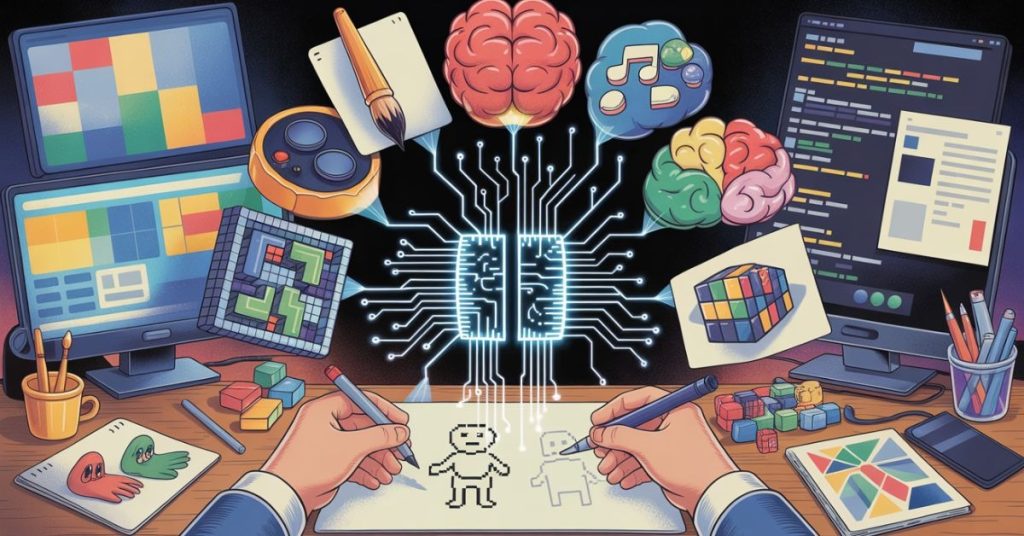
Making games is all about dreaming up experiences and then making them real. It’s about fixing things and being creative and doing some science, so when people play your games, they have fun. Writing Astrocade games isn’t all technology; a big part of it is taking your ideas and turning them into fun, interactive realities.
You learn to think differently when you play. You’ve got to have some storytelling, a little design, and some problem-solving to create something people love to pick up and play. Making games hell, just taking a break to play Zombie Runner is an awesome way to channel your inner creative, pick up new ways of thinking, and figure out just how much fun game creation can be.
In this post, you’ll learn a little about how game programming makes you a more creative person. Solo or not, making games will teach you things about creativity that you can take with you into lots of other places.
Thinking Outside the Box
Making a game makes you think about problems in a different way. You don’t walk a straight line: you ask yourself questions like, “What if this world functioned differently?” or “How can I surprise the player?” That way of thinking stimulates creative thinking that can be applied to all aspects of life.
They say even small games can inspire huge leaps in creativity. Creating one-of-a-kind characters, game mechanics, or narratives pushes you to get out of your comfort zone and test concepts that may at first feel weird or unworkable. After a while, this routine trains your mind to think about problems in new ways.
Problem-Solving Skills
There are all sorts of challenges in game development, ranging from working out bugs to balancing difficulty levels. Each challenge demands an inventive response, and you learn to think on your feet. You begin to view barriers not as roadblocks but as chances to refine your thinking.
If a stage is too easy or a narrative doesn’t captivate, for instance, you need to tinker and iterate. Such a trial-and-error attitude is precisely what develops the mentality needed for problem-solving, whether in game endeavours or in actual life.
Storytelling and Imagination
Games are narratives that you get to play, not just watch. Creating a story, characters, or dialogue lets your imagination run wild in ways traditional writing maybe can’t. You discover how to turn stories into interactive, fun, and emotionally rewarding experiences.
Making games, you learn about world-building, character arcs, and player choices, too. These experiences enrich your creativity and make storytelling a more dynamic, interactive process that you can take with you into writing, marketing, presentations, and beyond games.
Learning from Mistakes
Not a single game plays well on the first go. Bugs, glitches, or gameplay issues will, of course, occur, but every error is an opportunity to learn. When you evaluate mistakes and try out fixes, you grow resilience and an upgraded perspective, naturally.
This iterative process demonstrates that creativity isn’t about being perfect; it’s about trying things out, failing, and then improving. In fact, some of the most innovative game designs come from mistakes or unexpected results during development. The same can be said for early game systems like the Astrocade 67 game; despite its technical limits, developers created fun and engaging experiences through trial and error, helping shape the evolution of game design.
Collaboration and Teamwork
Multiple games are developed by teams, and collaboration involves how to share ideas, providing constructive feedback, and working with someone’s strengths. When you work together, creativity comes out because you can look at solutions and points of view you would never have come up with on your own.
You can see teamwork’s impact even in small projects with friends or classmates. When everyone brings their unique skills to the table, the result is frequently something that no one could have dreamed of alone, demonstrating just how well creativity thrives in collaboration.
Turning Ideas into Reality
One of the most gratifying things about game development is watching your concepts come to life. Something that starts as a sketch or a concept turns into a world you can interact with and that other people can explore and have fun with. This hammers home that creativity isn’t just about thinking, it’s about doing.
Creating playable versions of your abstract ideas helps you believe that you can make things, try things, and be innovative. And it imparts an important lesson: the process of developing, polishing, and releasing ideas is a creative discipline that grows stronger with practice.
Conclusion
Astrocade is not just entertaining it is also a strong influencer of creative thinking. From thinking around the corner to problem-solving, storytelling, learning from mistakes, working in teams, and making ideas real, the lessons you take away are useful, fun, and applicable to life beyond games. The House of Guinness Game captures this same spirit of creativity and collaboration, showing how gaming can inspire learning and innovation.
By focusing more on the process than the final result, trying bold experiments, and learning as you go, you can unlock your creativity and find new ways to solve problems. If you want to let your imagination run wild and see your ideas come to life, making games is one of the best ways to start.
FAQs
How does making games improve creativity?
Game development forces you to think in different ways, solve problems, and play around with ideas. You’re taught to build entire unique worlds, characters, and plots, which really helps with creative thinking.
Do I need coding skills to boost creativity through game-making?
Not so much. You can also use game-creation software such as Scratch, Unity, or RPG Maker that require little to no coding. The trick is the gameplay design, the story, and the mechanics, which are all more creative.
Can game-making help in other areas of life?
Yes! Problem solving, working with others, telling a story, and learning from errors are all skills that can be applied in school, at work, or in personal projects. Game design develops real-world creative problem-solving skills you can take anywhere..
How do mistakes in game-making help creativity?
Mistakes make you experiment, adjust, and upgrade your thoughts. “You’ve got to learn that a lot of creative breakthroughs come from trial and error, so you learn from your mistakes, that’s part of learning how to innovate.”
What is the easiest way to start learning game-making?
Keep projects simple and small when you are starting, using beginner-friendly platforms like Scratch, Construct, or GameMaker. Don’t worry about your perfection, just experiment with your ideas and step by step advance yourself with more complicated games.

