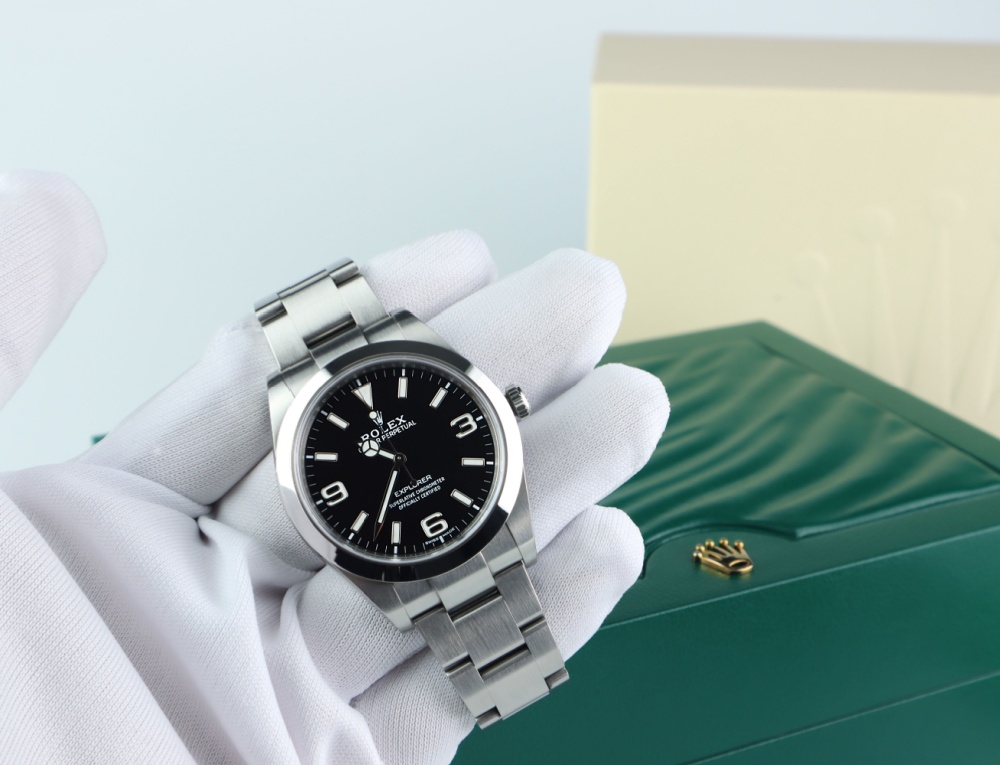
We’ve spent two decades watching how people navigate the Rolex market in London. Not as observers from the outside, but working directly with customers who come in uncertain, leave confident, and often return years later with someone they trust.
The patterns you notice over that span of time tell you more than any single transaction ever could.
The Velocity Problem Most People Don’t See
London’s luxury watch market moves fast. Too fast, usually.
Walk into most dealers and you’ll feel the pressure to decide quickly. Limited availability. Market fluctuations. Someone else looking at the same piece. The entire system is built around transaction speed — close the deal, move to the next customer, optimize for volume.
But here’s what we’ve learned from watching hundreds of people make significant purchases: the speed of the transaction rarely matches the speed at which someone actually processes a decision of this magnitude.
A Rolex isn’t just expensive. It carries weight — emotional, financial, sometimes generational. Rushing that decision to match market tempo creates a gap. And that gap shows up later, sometimes years later, as quiet regret or second-guessing.
What Deceleration Actually Looks Like
We built our practice around a simple inversion — what if we slowed everything down instead?
That means explicit permission to take your time. It means adding information rather than simplifying it away. It means showing you the constraints and limitations, not just the appeal.
When you’re looking at a significant purchase, you need space to think. You need transparency about what you’re actually buying, what affects its value over time, and what role it might play in your life beyond the initial excitement.
Deceleration isn’t inefficiency. It’s intentional design.
The customers who take longer to decide tend to stay satisfied longer. They come back when they’re ready for the next piece. They refer people they care about. The relationship outlasts the transaction because the transaction was never the point.
Technology Changes Distribution, Not Decision Quality
London’s Rolex market has shifted dramatically with digital platforms, online marketplaces, and instant price comparisons. You can see global inventory in seconds. You can compare dealer margins. You can read reviews from people you’ve never met.
Technology solved the access problem. It didn’t solve the decision problem.
More information doesn’t automatically mean better understanding. Faster transactions don’t correlate with sustained satisfaction. The tools changed, but the human processing speed didn’t.
We use technology differently — not to accelerate the sale, but to reduce information asymmetry. You can explore our current collection of gents’ Rolex watches, see what’s available, and take the time you need to understand what you’re considering. You should know what we know. You should understand the factors that affect value, the market patterns we’ve observed, the realistic expectations for ownership over time.
Transparency builds trust. Trust enables better decisions.
What the Long View Actually Reveals
When you measure success by relationship duration instead of transaction frequency, you notice different things.
You notice that the customers who felt rushed rarely come back. You notice that the ones who were given space to think clearly tend to return when they’re ready. You notice that honesty about limitations creates more loyalty than exaggeration about capabilities.
The luxury market in London will always have operators optimizing for speed and volume. That model works for them, and it works for customers who value efficiency above everything else.
But for people who want to make a significant purchase with confidence — who want to understand what they’re buying and why it matters — the alternative has to exist.
We’ve watched this pattern repeat across twenty years and thousands of conversations. The approach that prioritizes your readiness over our revenue consistently produces better long-term outcomes.
Does that sound like the kind of process that would work for you?
